
At a Glance
- Setting fence posts in concrete provides the highest stability and is the recommended method for durable metal fences, such as those offered by ELEO Express.
- Bolt-down posts enable quick and clean installation on solid surfaces and offer more flexibility for future changes.
-
The decision depends on the fence height, weight, soil conditions, and the planned installation effort.
The fixing of fence posts is the foundation of every fencing project. It determines the immediate stability, longevity, and security of the entire system for decades to come. Choosing between setting posts in concrete or bolting them down is a fundamental decision that has far-reaching consequences for resilience, effort, and the visual integration into the property. High-quality metal fencing systems require professionally executed anchoring. This guide compares the decisive criteria to help you make an informed and sustainable choice.
Setting Fence Posts in Concrete – Stable and Permanent

Setting fence posts in concrete is considered the gold standard when it comes to maximum stability and durability. With this method, the post—particularly a metal fence post—is placed into a dug hole and cast with wet concrete. This creates an inseparable, monolithic connection between the post and the ground. This massive anchoring is essential to absorb high loads caused by wind, leaning, or the leverage effect of gates.
A decisive factor for the longevity of a concrete foundation is the founding depth. In the UK, this should generally be at least 60 to 80 cm to reach the frost line. This prevents freezing water in the soil from lifting the foundation (frost heave) and impairing the statics of the fence over the years. A foundation that sits deep enough remains unaffected by these ground movements. Using the right concrete for fence posts ensures swift and uncomplicated processing.
- Unmatched stability and sturdiness
- Optimal load distribution in the ground
- Ideal solution for heavy metal fences, high privacy elements, and gates
- Permanent protection against soil settlement and frost heave
- Allows for compensation of uneven terrain
- Higher effort in terms of labour and time (digging, mixing, curing)
- Requires earthworks and the disposal of excavated soil
- A permanent solution that can only be moved or removed with great effort
Knowing how much concrete is needed for the fence posts is central to planning. As a rule of thumb, depending on the depth and post type, 1.5 to 2 bags of 20 kg post-mix concrete are required per post.
Bolting Down Fence Posts – Flexible and Quickly Installed

Screw-on posts
Bolting down fence posts represents an efficient alternative, particularly suited for already paved or finished surfaces. Here, the posts are not mounted in the ground but via special post bases or welded footplates onto a solid substrate such as a concrete foundation, a thick patio slab, or a stable wall coping. Fixings are made using heavy-duty anchors and robust bolts that create a firm connection with the substrate.
The greatest advantage of this method lies in the speed and cleanliness of the installation. Since no earthworks are required and the concrete does not need to cure, the fence is fully load-bearing immediately after installation. This flexibility is also invaluable if the course of the fence needs to be changed later or if the installation is planned only temporarily. Dismantling is uncomplicated compared to a concrete foundation and leaves hardly any trace. However, stability is directly dependent on the quality of the substrate. A thin layer of screed or loosely laid paving slabs do not offer sufficient hold for the tensile and shear forces acting on a post.
| Criterion | Setting in Concrete | Bolting Down |
|---|---|---|
| Stability | Maximum, through firm connection with the soil | High, but dependent on substrate quality |
| Installation Time | Longer, including concrete curing time (24–72 hours) | Very fast, load-bearing immediately after bolting |
| Flexibility | Very low, designed as a permanent installation | High, posts can be dismantled and moved |
| Substrate | Unsecured ground (soil, lawn, gravel) | Solid substrate (concrete slab, wall, solid paving) |
Load-bearing Capacity & Hold – Which Solution is More Resilient?
The question of load-bearing capacity is a question of physics. A post set in concrete acts like a lever embedded in the ground. Wind pressure or impacts create a torque at ground level. The concrete foundation counteracts this torque with a large resistance area in the soil and distributes the loads deep into the ground. This ensures enormous stability, even for high fences with a large wind load area or for the dynamic loads of a gate leaf.
With a bolt-down post, the entire load is concentrated on a few fixing points. Stability depends on the shear and tensile strength of the anchors as well as the integrity of the substrate material. On a massive, thick reinforced concrete slab, this can be a very stable solution. However, on brittle concrete, thin slabs, or at edges, this connection fails significantly faster under load than a deep-founded foundation. For light decorative fences, bolting down is often sufficient; for security-relevant or high fences, setting in concrete remains the better method.
Substrate & Area of Use – Concrete, Paving, or Soil

Padua fence in hot-dip galvanised finish mounted on a wall.
The nature of the ground is the deciding factor when choosing the fixing method.
- Natural substrates such as lawns, soil, or gravel.
- Property boundaries where no hardstanding exists yet.
- Slight slopes, as the post height can be precisely adjusted in the liquid concrete.
- Projects with the highest requirements for security and longevity.
- Installation of heavy gates and pedestrian gates.
- Existing concrete surfaces such as patios, driveways, or paths.
- Mounting on wall copings or L-shaped retaining stones for demarcation.
- Indoor areas or balconies where earthworks are not possible.
- Situations where fast and clean installation is the priority.
Planning should consider not only the current state but also future projects. A solution bolted onto a patio today might have to make way for an extension in a few years. A fence set in concrete, however, defines a boundary for generations.
Discover posts and accessories
Effort & Time – What Suits Your Project Better?
The effort in terms of time and materials differs significantly. Setting fence posts by concreting is a multi-stage process. It includes excavating the foundation holes, mixing the concrete, precisely aligning the posts, and a necessary waiting period until the concrete reaches its final strength. Tools such as spades, augers, and a spirit level are essential.
In contrast, bolting down requires fewer steps but more technical equipment. A powerful hammer drill for drilling the anchor holes into concrete is mandatory. The work is dustier but overall cleaner than earthworks. The decisive advantage is the time saved: a fence can often be completely installed in a single day, as there are no drying times. This can, especially in professional installations, reduce labour costs.
Tip: Choose Post Fixing to Match the Fence Type
The type of fence often dictates the fixing method. Massive, heavy wrought-iron fences or high metal privacy elements generate significant wind loads and, for structural reasons, mandatory concrete foundations. The same applies without exception to gate posts. The leverage forces acting when opening and closing a gate leaf can loosen a bolted connection over time and lead to instability.
For light and low fences, such as delicate front garden fences or decorative boundaries, bolting down can be a perfectly adequate and economical solution, provided the substrate is load-bearing. As a guideline: the higher, denser, and heavier the fence, the clearer the recommendation for setting the posts in concrete.
Further details on choosing the right method, the appropriate post type, and the exact calculation of the required amount of concrete for fence posts can be found in our in-depth blog article: Find the right post solution for your fencing project – stable, flexible, and durable.
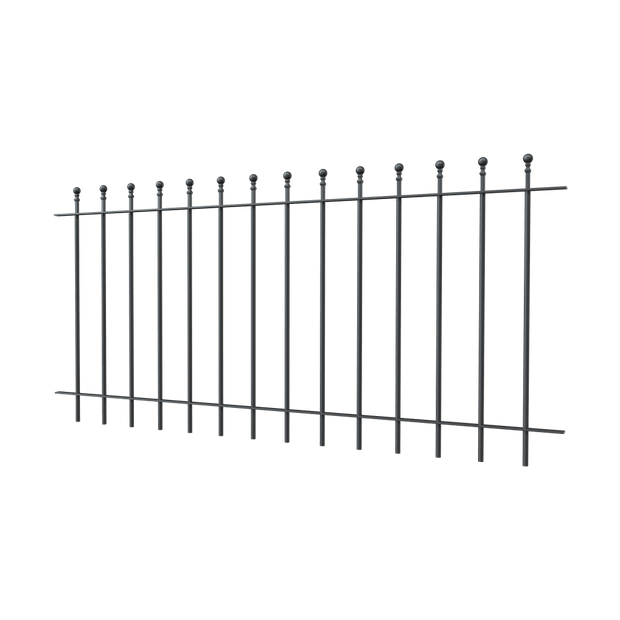
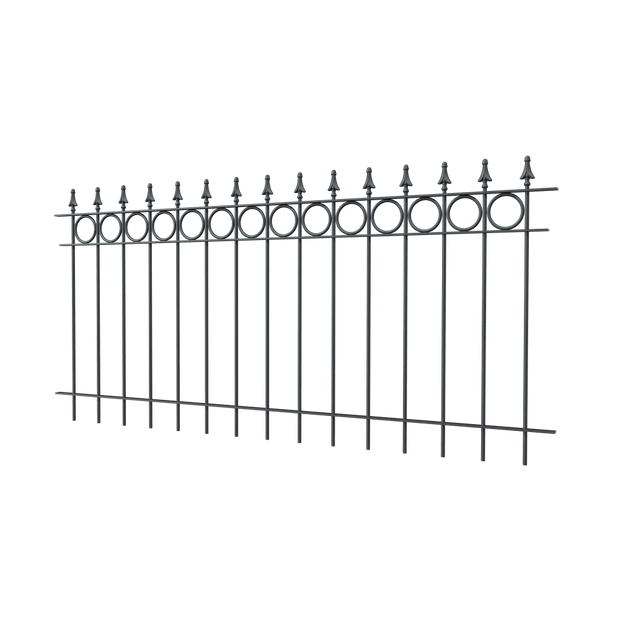
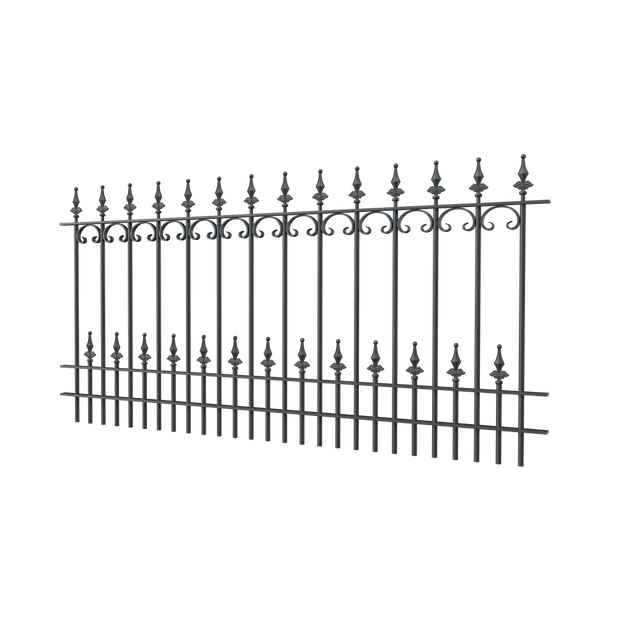
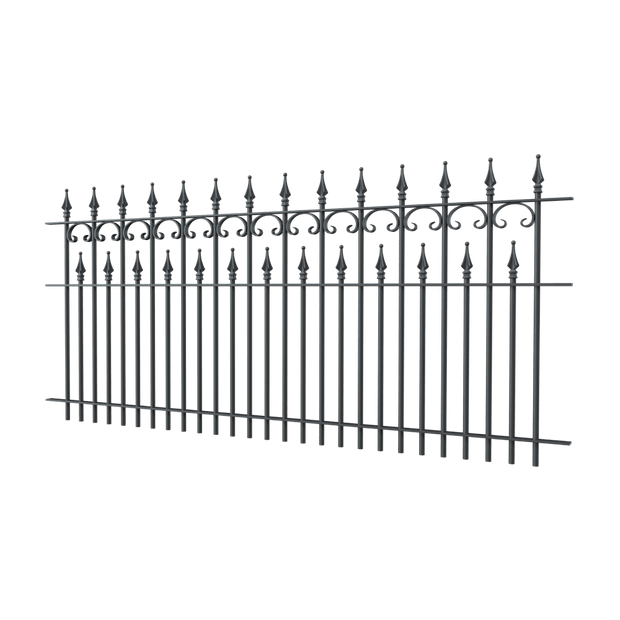
Our Fence Models