
Key Takeaways
- For outdoor projects, hot-dip galvanising is the more durable and economical solution due to its thicker protective layer and superior robustness.
- Electro-galvanising offers a smooth appearance and is more cost-effective, but it is primarily suitable for indoor applications without exposure to the elements.
- ELEO Express consistently uses hot-dip galvanising for fences, gates, and railings to ensure maximum service life and low maintenance.
The choice between hot-dip galvanised or electro-galvanised significantly determines the lifespan and maintenance requirements of a steel component. Whether it is a new garden fence, a courtyard gate, or a balcony railing – the right corrosion protection is the foundation for an investment that proves its worth over decades. This guide explains the essential differences between the processes in a practical manner, highlights their respective strengths and weaknesses, and demonstrates why hot-dip galvanising is the superior choice for outdoor applications in most cases.
What does galvanising actually mean?

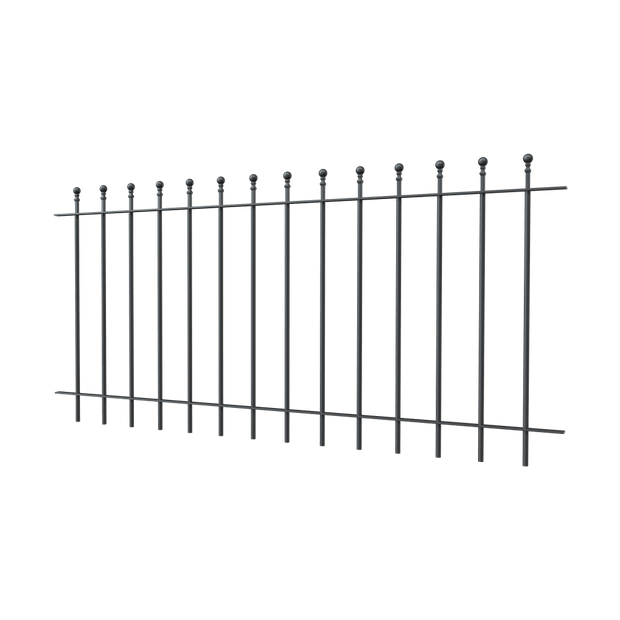
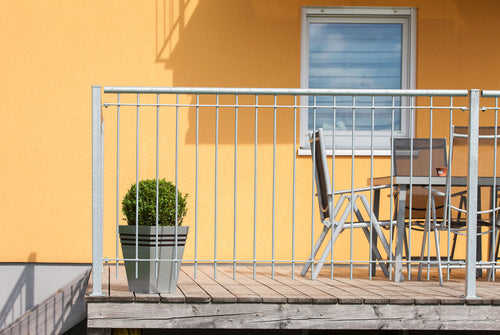
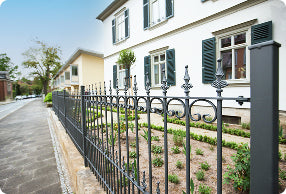
In the image: Belluno Railing - hot-dip galvanised
Zinc as corrosion protection – the principle explained simply
Steel and iron rust when they come into contact with oxygen and moisture without protection. During galvanising, the component is coated with a protective layer of zinc. This layer fulfils two central tasks. Firstly, it forms a physical barrier that shields the steel from environmental influences. Secondly, it provides active, electrochemical protection, also known as "cathodic sacrificial protection".
This means: even if the zinc layer is damaged by a scratch, the less noble zinc sacrifices itself and corrodes first before the underlying steel is attacked. This mechanism is crucial for durability in harsh everyday conditions. However, the effectiveness of this protection depends directly on the thickness and nature of the zinc layer, which is determined by the respective process.
An overview of the two most important processes
Two processes have established themselves for the protection of steel parts, which differ fundamentally in process and result:
- Electro-galvanising (Electrolytic galvanising): Here, zinc is deposited onto the steel by means of an electric current in an aqueous electrolyte bath. A thin, visually very appealing layer is created.
- Hot-dip galvanising (Batch galvanising): The entire component is immersed in a bath of molten zinc at a temperature of around 450 °C. The result is a thick, extremely resistant protective layer.
Which process is the right one depends almost exclusively on the planned place of use. Exposure to weather, mechanical influences, and chemical stress determines whether a thin, fine layer is sufficient or a robust armour is necessary.
Electro-galvanising – affordable, but with limits
How does electro-galvanising work?
In electro-galvanising, also known as electrolytic galvanising, the steel part is suspended as a cathode in a zinc-containing electrolyte solution. By applying an electrical voltage, positively charged zinc ions migrate through the bath and deposit evenly on the steel surface. This process allows for very precise control of the coating thickness, which typically lies between 5 and 25 micrometres (µm). The result is a smooth, often slightly bluish shimmering or shiny surface.
Advantages: Cost and appearance
The strengths of electro-galvanising are clear and make it the ideal choice for certain applications:
- Precise and uniform surface: The process creates an aesthetically pleasing, smooth finish. Threads, fittings, and fine contours remain true to size, which is important for precise components such as screws or fixings.
- Lower costs: Particularly in the mass production of small parts, electro-galvanising is often cheaper than hot-dip galvanising.
Therefore, this process is an excellent solution for components used in dry indoor areas, such as furniture fittings, housing parts, or in the electrical industry.
Disadvantages: Coating thickness and outdoor suitability
The decisive disadvantage is the low coating thickness. Outdoors, a thin zinc layer is a weak opponent for the permanent stress caused by rain, snow, UV radiation, and air pollutants. The protective layer is worn away over time, and this process happens significantly faster in the open air.
Edges, corners, welds, and boreholes are particularly critical. At these points, a thin electrolytic layer is often even thinner and provides the first target for corrosion. The result is unsightly rust spots that spread quickly and can jeopardise the structural integrity of the component. Electro-galvanising is therefore only conditionally suitable for outdoor use under very low stress or with an additional, thick protective paint finish.
Hot-dip galvanising – superior protection for outdoors

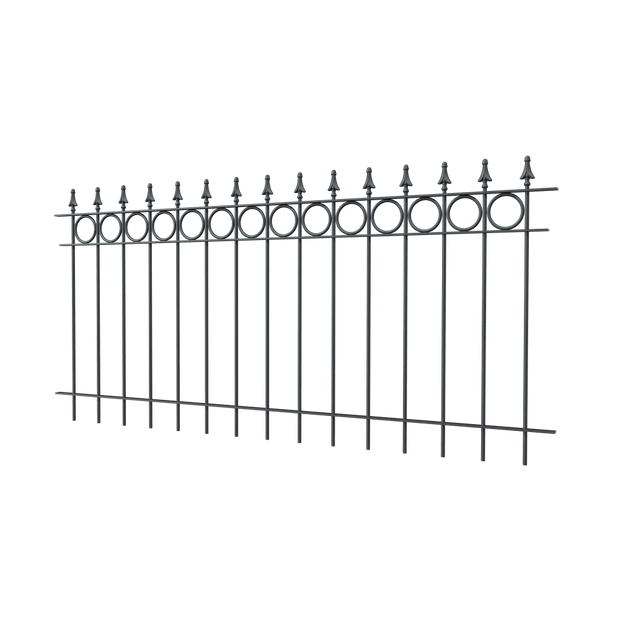
In the image: Lucca Railing - hot-dip galvanised
How does hot-dip galvanising work?
Hot-dip galvanising is a thermal process. After careful pre-treatment (degreasing, pickling, fluxing), the steel part is completely immersed in a melt of liquid zinc. During this process, the iron in the steel reacts with the zinc. Not only is a surface layer applied, but an insoluble, metallurgical bond is formed from several iron-zinc alloy layers. These layers are extremely hard and firmly bonded to the steel substrate. On top of this lies a layer of pure zinc. This composite protection is what makes hot-dip galvanising so uniquely robust.
Why the coating thickness makes the difference
The layers created during hot-dip galvanising are significantly thicker at 50 to 150 µm or more than those in electro-galvanising. This high coating thickness is like a large reserve of protective material. Every micrometre of zinc worn away by environmental influences extends the protection duration. A thick layer offers:
- Maximum protection at critical points: Since the liquid zinc flows into every corner, every hole, and every cavity, even hard-to-reach areas and edges are optimally protected. On edges, the layer is often even thicker than on flat surfaces.
- High mechanical durability: The hard iron-zinc alloy layers resist impacts, abrasion, and scratches significantly better than a purely applied zinc layer. This is crucial for fences, gates, or posts that have to withstand a lot in everyday use.
- Decades of maintenance-free service: A professionally hot-dip galvanised surface requires no maintenance or touching up for many years or even decades.
Lifespan and corrosion resistance in comparison
Under normal atmospheric conditions, hot-dip galvanising can achieve a protection duration of over 50 years. Even in more aggressive environments such as industrial areas or near the coast, it offers reliable protection for several decades. In direct comparison, the lifespan of an electro-galvanised surface outdoors is often limited to a few years before the first signs of rust appear. For all components permanently exposed to the weather – from boundary fencing to handrails on outdoor stairs – hot-dip galvanising is therefore not only the safer choice but also by far the more economical solution in the long term.
Hot-dip galvanised vs. electro-galvanised – a direct comparison
Comparison table (Coating thickness, durability, costs, area of use, appearance, sustainability)
| Criterion | Electro-galvanised | Hot-dip galvanised |
|---|---|---|
| Coating thickness | Thin (approx. 5–25 µm), very uniform | Thick (approx. 50–150 µm), very robust, thicker at edges |
| Durability | Good indoors, very limited outdoors | Excellent for outdoor use, protection for decades |
| Costs | Cheaper to purchase, but potential follow-up costs | Higher initial investment, but more economical over its lifespan |
| Area of use | Screws, fixings, components for dry indoor rooms | Fences, gates, railings, steelwork, masts, outdoor structures |
| Appearance | Smooth, uniform, often shiny or bluish | Characteristic crystalline ("zinc flower"), matt silver-grey |
| Sustainability | Recyclable, but shorter lifespan requires earlier replacement | Extremely durable, reduces resource consumption for replacement |
When is electro-galvanising sufficient?
Electro-galvanised is a pragmatic and good choice if the environmental conditions are controllable and mild. This applies to:
- Components installed exclusively in dry indoor rooms.
- Components that are not exposed to mechanical stress or abrasion.
- Visible elements in furniture or shopfitting where a decorative, smooth surface is important.
However, as soon as regular condensation, high humidity, or contact with outdoor air comes into play, the decision should be critically scrutinised.
When is hot-dip galvanising the right choice?
For almost all outdoor construction projects, hot-dip galvanised is the technically and economically superior solution. The decision for this process is particularly without alternative when:
- Maximum service life and freedom from maintenance are required.
- The component is exposed to weather, splashing water (e.g. from road salt), or contact with the ground.
- Mechanical stresses such as impacts, scratches, or frequent use are to be expected.
- Follow-up costs for repairs, renovation, or replacement are to be avoided.
When weighing up between hot-dip galvanised or electro-galvanised for outdoor use, investing in hot-dip galvanising is an investment in long-term peace of mind.
The most common mistakes in material choice
Electro-galvanised parts outdoors – a costly mistake
A typical error is the assumption that "galvanised" always means "suitable for outdoors". Cheap, electro-galvanised post supports, screws, or brackets are often used outdoors and lead to disappointment after a short time. The first signs are often inconspicuous, but the result is always the same: ugly rust streaks run down facades, wood discolours an unpleasant brown, and the stability of the structure is jeopardised. What appeared to be a saving at first quickly turns into a nuisance with high follow-up costs for renovation and replacement.
What happens if the zinc layer is too thin?
A zinc layer that is too thin is literally "eaten up" by the weather. The process takes place in several phases:
- Initially, the surface loses its shine and becomes matt (white rust formation).
- At the weakest points – usually edges and scratches – the first red rust breaks through.
- Moisture gets underneath the thin zinc layer, it flakes off, and corrosion spreads across the surface.
This gradual decay significantly shortens the useful life of the entire project. Robust hot-dip galvanising prevents exactly this scenario by providing a massive reserve of protection.
Hot-dip galvanising and sustainability

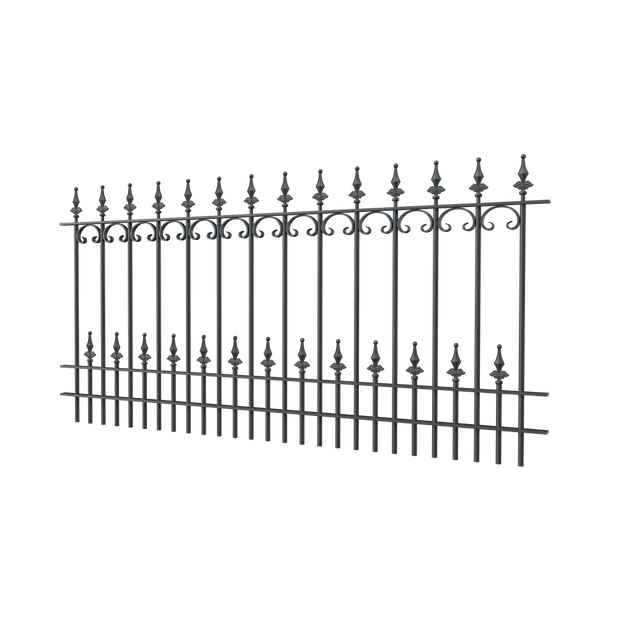
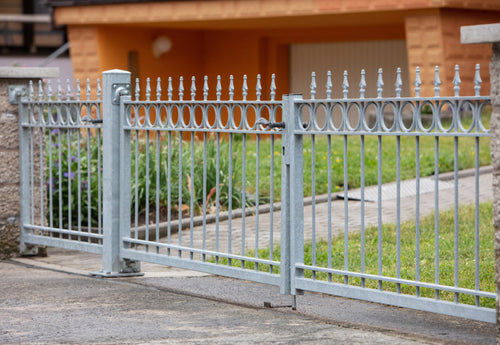
In the image: Ancona Garden Gate - hot-dip galvanised
Recyclability of galvanised steel
Both steel and zinc are valuable raw materials that are excellent for recycling. Galvanised steel can be melted down without problems, whereby the zinc evaporates, is captured, and reused. From an ecological point of view, however, it is not just recyclability that is decisive, but above all the service life of a product.
Durability as a sustainable decision
The most sustainable solution is the one that lasts the longest. A hot-dip galvanised fence that fulfils its function for 50 years or more without needing replacement massive conserves resources. It avoids the energy and material expenditure that would be required to produce two or three follow-up products from less durable material. The decision for the more durable hot-dip galvanising is therefore an active contribution to resource conservation and waste avoidance. It embodies the principle of "building for generations" rather than for short-term needs.
Our products – hot-dip galvanised for maximum durability