

At a Glance
- With practical tips on cleaning, furniture care, plant protection, and decoration, we show you how to easily and effectively winterise your balcony so it remains inviting even during the cold season.
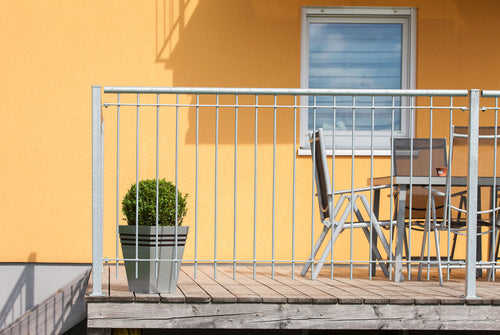
- High-quality metal balcony railings, such as the Belluno model by ELEO, are easy to clean, provide a secure hold for winter decorations or bird feeders, and create visual highlights that impress even in winter.
- ELEO supports balcony owners with customisable railings made of robust metal, complemented by helpful instructions for installation and maintenance.
The cold season is fast approaching – it’s time to winterise your balcony. This ensures your outdoor living room stays tidy and well-kept, allowing it to be enjoyed even on beautiful winter days. In this article, we provide seven useful tips on how to optimally prepare your balcony for the winter months.
1. Clean the balcony thoroughly
To winterise your balcony, it is important to first give it a thorough clean. Remove leaves, dirt, and any other residue from the floor and the balcony railing. This not only helps the balcony look tidy but also prevents dirt and moisture from penetrating the floor and causing damage.
2. Check balcony furniture
If you do not intend to use your balcony in winter, it is best to store your furniture indoors or, if space is limited, cover it. You can air the covers on dry, sunny winter days to prevent mould growth. Wooden chairs and tables should be cleaned and allowed to dry beforehand. It is also recommended to apply oil to wooden furniture in autumn.

3. Protect plants
Winter-hardy balcony plants can usually remain outside without any problems – cover them with leaves or fir branches to provide extra protection against frost. Potted plants can be wrapped in hessian to protect the root area. Sensitive plants that are not winter-hardy should be moved indoors to prevent damage from the cold.
You don't necessarily have to take down your balcony boxes for the winter. If you like, you can fill them with winter-hardy, seasonal plants. Ideal choices include Alberta spruce, common heather, or wintergreen.

4. Check the flooring
You should inspect your balcony flooring for potential damage. Cracks or holes can lead to water penetrating the area below and causing damage there. Repair such damage early to prevent major issues. You might also consider whether additional sealing of the floor is useful to keep moisture out.


