How much does a metal fence cost? An overview of important price factors
Published: 06 MAR 2026
Last Updated: 12 AUG 2026
Key Takeaways
The cost of a metal fence per meter is largely determined by the material, coating, dimensions, and the method of installation.
In addition to the fence panels, accessories such as posts, gates, and fastening systems significantly influence the total price.
High-quality, durable metal fences, such as those offered by ELEO Express, minimize subsequent costs for maintenance and upkeep.
The question "What does a metal fence cost?" cannot be answered with a flat rate. A metal fence is not an off-the-shelf product, but a configured system whose price depends on numerous variables. Material quality, corrosion protection, dimensions, terrain conditions, and installation effort interlock like gears. A transparent understanding of these price factors is the foundation for realistic budget planning and protects against unexpected extra costs. The goal is to make an informed decision that considers not only the purchase price but also long-term cost-effectiveness.
The anatomy of metal fence costs: More than just the price per meter
The costs of a metal fence are made up of various components that go far beyond the pure price of the fence panel. Each factor can noticeably influence the total price. For example, a taller fence not only requires more material per element but also sturdier posts and deeper anchoring in the foundation to withstand the increased wind load. The same applies to the surface finish: A high-quality powder coating over galvanization (duplex system) is more expensive to purchase, but effectively prevents subsequent costs for rust treatment or premature replacement.
In addition, the intended purpose plays a central role. Should the fence primarily create a symbolic boundary, serve as a stylish architectural element, or increase the security of the property? Depending on the requirements profile, the required fence heights, bar spacing, and gate solutions will vary, which directly impacts the calculation. Clarifying these goals early on allows for a more precise comparison of offers and ensures that the fence is optimally dimensioned for its planned service life.
Metal fence costs per meter – a meaningful breakdown
Stating metal fence costs per meter is a popular but often misleading comparative value when viewed in isolation. One meter of a fence element is quickly priced; a fully installed meter of fencing, however, includes numerous additional items. For transparent planning, it makes sense to distinguish between three price levels:
1) Material price for the fence panel:This price exclusively covers the fence element itself, for example, a bar or ornamental fence, including the chosen surface treatment.
2) System price per meter:Here, in addition to the fence panel, the proportionate costs for posts, fastening material, post caps, and any required adapters for sloped situations are added.
3) Total project price:This level represents the complete costs. It includes the system price multiplied by the fence length, as well as all other costs for installation, foundation work (excavation, concrete), travel, disposal of old material, and special solutions like corners, gate systems, or mounting on a low wall.
When comparing offers, it must therefore always be checked whether the stated costs only concern the fence panel or whether posts and accessories are already included. Posts, corner constructions, and gate connections in particular can make up a significant portion of the total budget.
Material and workmanship – the influence of quality on the price
The choice of material and the quality of workmanship largely determine whether a metal fence only fulfills its function in the short term or represents a value-stable investment in the long term. Depending on the steel quality, material thickness, and precision of the welds, the stability, feel, and lifespan vary significantly. A fence with insufficient material thickness can warp over time and lose stability, especially with large spans or in wind-exposed locations.
The following aspects are cost drivers here:
Material thickness and profile type:Solid materials or thick-walled tubular profiles are more robust and durable than thin-walled alternatives, which is reflected in the manufacturing costs.
Quality of workmanship:Clean, continuous welds and a precise fit of the components are not only visually more appealing but also minimize potential weak points for corrosion.
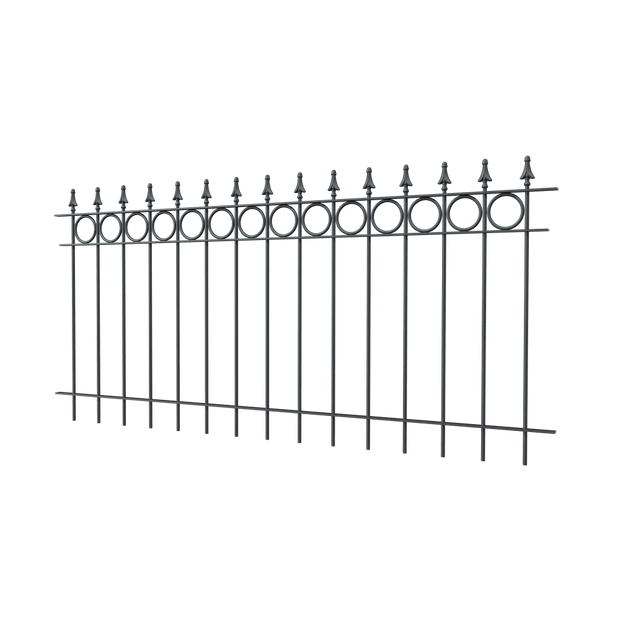
Design and complexity:Elaborate decorative elements, ornamental finials, or custom patterns require a higher manufacturing effort and thus influence the price.
Long-term planning should therefore always consider the relationship between price and the quality offered. A robust fence designed for the specific stresses at the location often proves to be the more economical choice.
Coating and corrosion protection – galvanized or powder-coated?
Corrosion is the main enemy of any steel fence. Surface protection is therefore not only an essential price factor but also the most important lever for minimizing subsequent costs. The most proven method is a two-stage structure: hot-dip galvanizing as fundamental basic protection, and a subsequent powder coating as an additional layer of protection and design.
Hot-dip galvanized: Robust basic protection
During hot-dip galvanizing according to DIN EN ISO 1461, the steel is dipped into molten zinc. This creates a resistant, metallic protective layer. This not only shields the steel but also offers "cathodic protection": In the event of minor scratches, the less noble zinc sacrifices itself and actively prevents rust formation on the steel.
Powder-coated: Aesthetics and additional protection
Powder coating is an electrostatic process in which color pigments are applied to the galvanized surface and baked at high temperatures. The result is a smooth, extremely durable, and UV-resistant surface. This combination (duplex system) offers maximum protection against weathering.
Although multi-layer protection systems are more expensive to purchase, they reduce the risk of rust spots and the associated maintenance effort to a minimum. Particularly in exposed locations – such as near the coast, on heavily trafficked roads (road salt), or with heavy irrigation – such premium protection is a sensible investment.
Height and length – how the fence dimensions affect the total costs
The dimensions of a fence affect the costs in two ways: directly through material consumption and indirectly through structural requirements. A taller fence not only requires more steel but is also exposed to higher wind loads. This requires sturdier posts, a more robust fastening technique, and often larger foundations. The total length of the fence, in turn, determines the number of fence panels and posts required, as well as the effort involved in exactly aligning the run, setting corners, and leveling out height differences.
For the calculation, the following applies:
Length:Determines the quantity of system components. For long, straight stretches, the installation costs per meter can decrease, while many corners increase the effort.
Height:Has a direct impact on material requirements and structural integrity. Common heights range from 80 cm for visual structuring to over 180 cm for increased privacy and burglary protection.
Terrain profile:Slopes or uneven terrain often require stepped installation or special adaptation elements, which affects material and installation costs.
Careful planning of the fence line can save costs. Avoiding unnecessary corners and determining gate positions early on optimizes material usage.
Installation – DIY or professional company?
The fence elements can be attached to existing posts as well as to steel posts.
Installation costs represent a significant item and at the same time offer the greatest potential for savings. People with DIY skills can save their budget by doing the work themselves. At the same time, installation is the area where mistakes can have costly consequences: crooked posts, incorrect spacing, or insufficient foundations can impair the stability and lifespan of the entire fence.
Cost-relevant factors during installation include:
Foundation work:The creation of point foundations for the posts, the size of which depends on soil conditions and frost depth.
Soil conditions:Heavily stony, clayey, or root-filled soil significantly increases the excavation effort.
Accessibility of the property:Narrow driveways or long transport routes for materials and tools can extend the working time.
Precision:Exactly aligning the fence line, maintaining even spacing, and correctly installing gates require time and expertise.
A pragmatic decision-making aid: For complex projects with many corners, steep slopes, or large, heavy gates, hiring a specialized company often pays off by avoiding mistakes and securing a warranty. For short, straight stretches on level ground, self-assembly can be an economical alternative.
Accessories and extras – gates, posts, and fastening systems
When answering the question of what a metal fence costs, the importance of accessories is often underestimated. Yet it is precisely these components that determine functionality, stability, and longevity. Posts form the supporting framework, and gates are highly stressed mechanical components that require precise installation.
Important accessory items factored into the costs:
Posts and caps:Their number, material thickness, and mounting method (to be set in concrete or with a base plate for bolting down) are relevant.
Fastening system:High-quality brackets, clamps, and stainless steel screws ensure a permanently stable connection and facilitate installation.
Gates and pedestrian gates:Costs vary greatly depending on the width (single or double-leaf), locking mechanism, handle set, and optional electric drive.
Special solutions:These include special corner posts, angle adapters for atypical property lines, or finishing profiles for a clean transition.
Optional extras:Mailbox systems, integratable privacy elements, or special colors according to the RAL color chart.
Early and complete inclusion of accessories in the planning prevents the fence from standing but exhibiting functional defects in daily use.
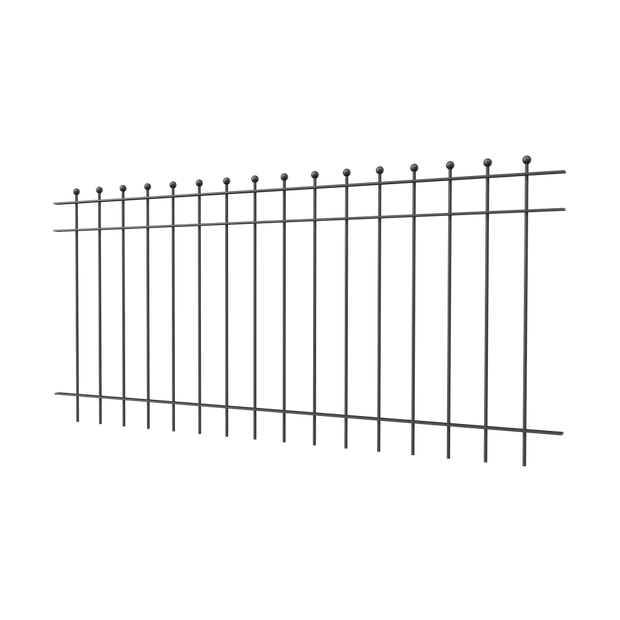
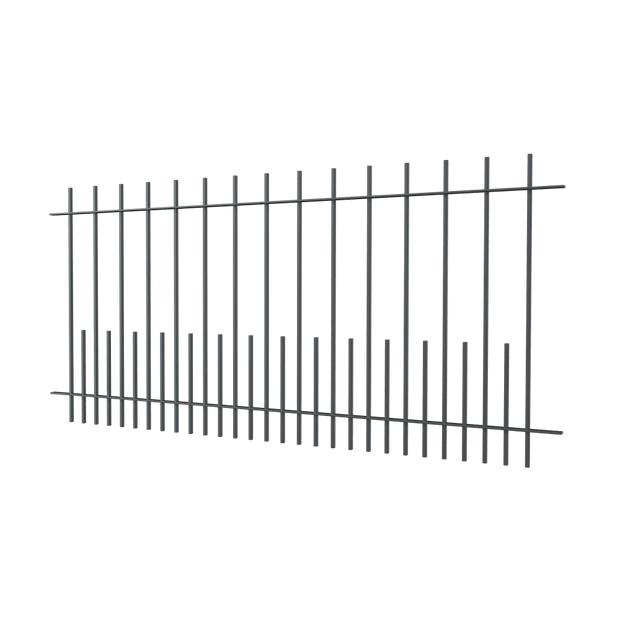
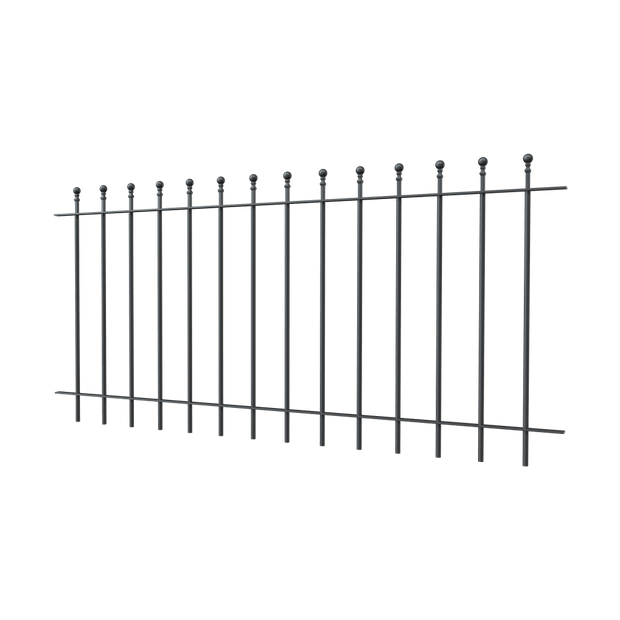
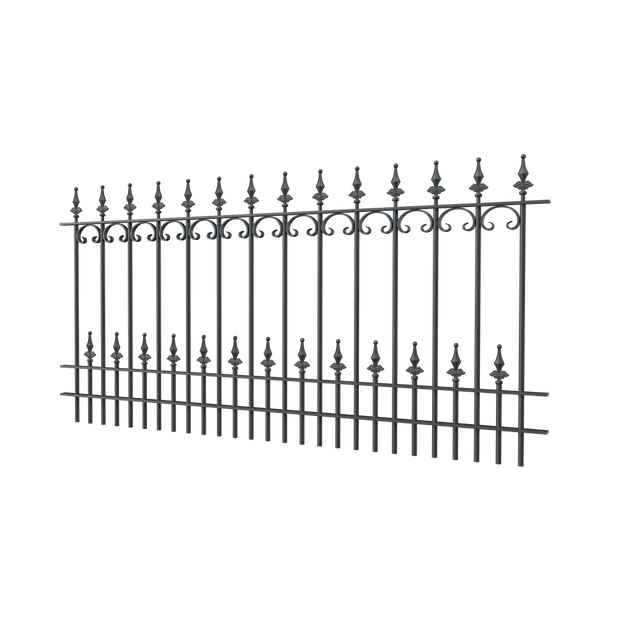
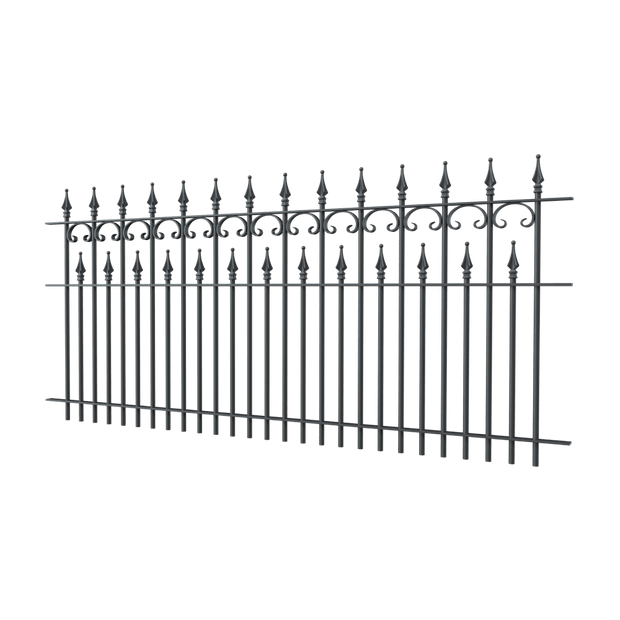
A transparent orientation is best achieved by breaking down the project into its individual items. The following overview demonstrates, using the Ancona fence model as an example, which cost blocks typically arise. This should be understood as a calculation structure; actual prices will vary depending on individual configuration.
Cost Item
What the price depends on
Practical tip for planning
Fence elements (fence panels)
Height, design, material thickness, surface protection (e.g., duplex)
Compare not only the price per meter but also the material and manufacturing quality.
Posts
Quantity (depending on fence length/element width), corner/end posts
A precise sketch of the fence layout helps in exactly determining the number of posts.
Fastenings & small parts
Quality of the system, corrosion protection (stainless steel), completeness
Using system components ensures compatibility and easy installation.
Gates (optional)
Width, design (single/double leaf), fittings, lock, electric drive
Treat gates as an independent construction project; foundations and alignment are particularly critical here.
Foundation/Subsoil
Soil class, frost depth, concrete requirement, possibly existing old foundations
A prior check of the subsoil (e.g., by digging a test hole) can prevent surprises.
Installation
DIY vs. professional company, accessibility, terrain profile, gate integration
For complex conditions, assess the installation effort realistically or request quotes.
With the help of such a detailed breakdown, the project price can be derived precisely. This is the most reliable answer to the question "What does a metal fence cost?", because it takes the specific property situation into account.
Long-term costs – why a durable metal fence is economical
The cost-effectiveness of a fence is not measured solely by the purchase price, but by the total costs over its entire service life (Total Cost of Ownership). A supposedly cheap fence can prove to be an expensive solution due to recurring maintenance work, necessary rust treatments, or premature replacement. This is particularly true in hard-to-reach places like property boundaries with dense vegetation, where every maintenance effort involves a great deal of work.
A metal fence becomes a long-term economic investment primarily due to the following characteristics:
High-quality corrosion protection:A duplex system of hot-dip galvanization and powder coating minimizes maintenance effort and practically rules out rusting through.
Stable construction:High material thickness and solid workmanship prevent deformation and ensure flawless, long-lasting functionality, especially with gates.
Easy-care surface:The smooth surface of a powder coating is easy to clean and makes regular painting unnecessary.
Well-thought-out system:The availability of compatible spare and extension parts ensures the value retention of the installation for many years.
Anyone who views the metal fence costs per meter exclusively as the purchase price ignores the often substantial subsequent costs. Solid planning with a focus on longevity and quality makes the investment calculable over decades and thus more economical.
How can metal fence costs per meter be compared meaningfully?
For a valid comparison, not just the pure price per meter of the fence panels, but the system price should be used. This must include the proportionate costs for posts, fastening materials, and any corner solutions. Only in this way is it avoided that an apparently cheap offer ultimately becomes more expensive due to high accessory costs.
What role does the coating play in the total costs of a metal fence?
The coating has a dual impact: It determines the purchase price and the subsequent costs. Hot-dip galvanizing offers solid basic protection. An additional powder coating not only increases resilience and longevity but also aesthetic quality. In locations exposed to severe weather, the surcharge for a duplex system pays for itself over the years through saved maintenance and repair costs.
What often causes unexpected increases in metal garden fence costs?
Unexpected additional costs frequently result from insufficiently checked installation conditions. These include difficult building ground, unconsidered slopes, a miscalculated number of posts for corners, or a gate whose foundation and adjustment are more complex than anticipated. A precise planning sketch of the fence line including all special features is the best way to achieve a realistic calculation.
Conclusion – With clear planning to transparently calculable metal fence costs
The question of what a metal fence costs is best answered through a structured analysis of the essential price factors: material and workmanship, coating, dimensions, accessories, and installation effort. A vague estimate thus becomes a reliable basis for planning. Those who focus on quality and high-quality corrosion protection do not necessarily invest more, but above all more sensibly. The result is a fence with minimal maintenance effort, high stability, and long-term calculable total costs, preserving value and aesthetics for decades.
Discover high-quality metal fences in various designs – durable, low-maintenance, and fitting your budget.
The Key Facts at a Glance A garden fence offers the ideal stage for atmospheric autumn décor outdoors – from glowing pumpkins to elegant wreaths. Particularly sturdy metal fences, such...
Should you replace or repair your garden fence? Find out when it’s worth replacing it, what the costs are, and why hot-dip galvanised metal fences from ELEO are the most...
Child-safe garden: How to reliably protect your child from hazards around gates, ponds and more. Discover sturdy metal fences and gates from ELEO for maximum safety.
Subscribe to our newsletter & secure £25*!
The newsletter voucher can be redeemed once with a minimum order value of £250.