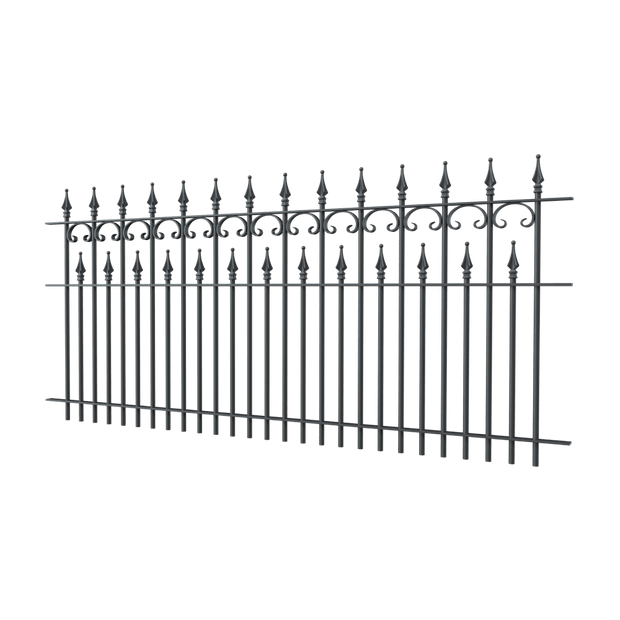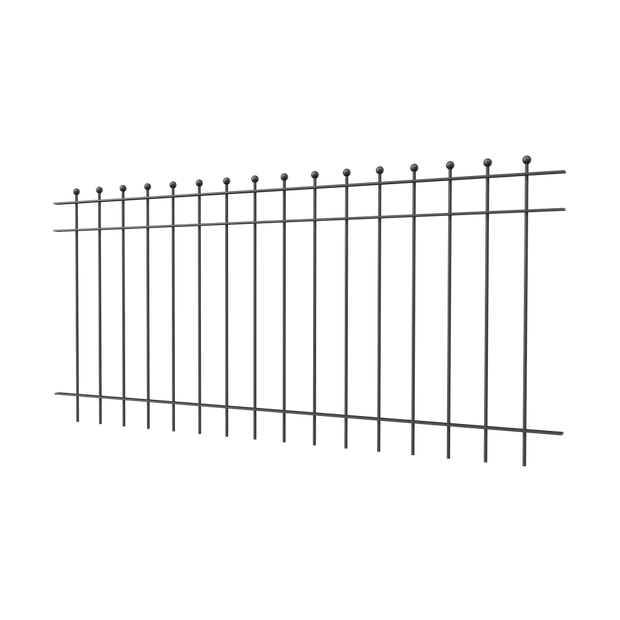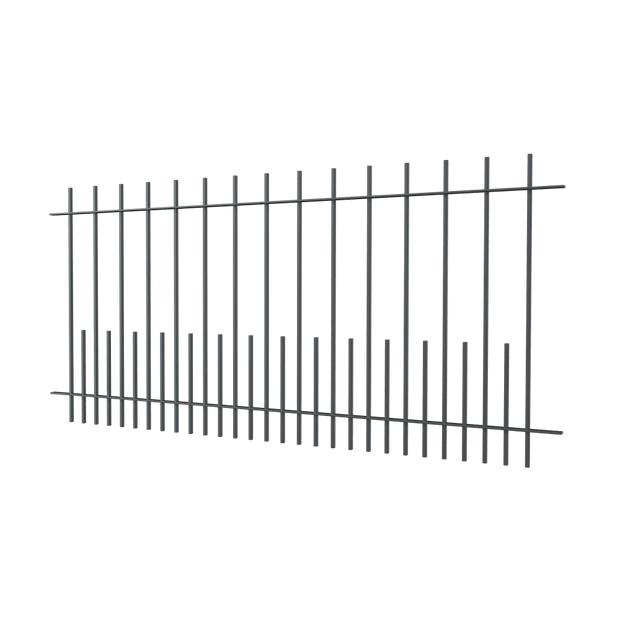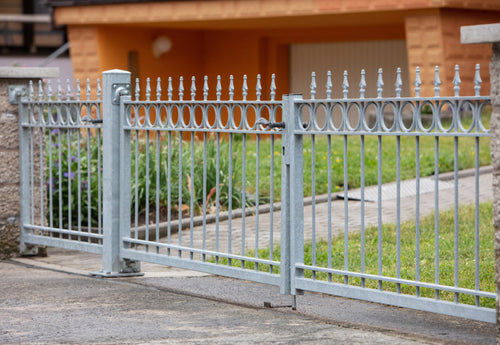

Key Points at a Glance
- Wobbly posts, a crooked fence line or recurring material damage are clear indications that replacement makes more sense than repair.
- The cost of replacing a garden fence depends on the material, installation and foundations. Over a period of 10 years, metal often proves to be the most economical choice.
- Low-maintenance metal fences in standard dimensions, such as those from ELEO Express, offer a durable and visually appealing solution that makes replacement predictable and sustainable.
A garden fence is far more than a property boundary. It provides security, protects privacy and shapes the first visual impression of a property. However, when a fence loses stability and visual appeal over the years, one key question arises: Is a repair still worthwhile, or is it time to replace the old fence completely? This article provides well-founded guidance to help you decide. It examines specific signs that action is needed, outlines realistic costs and sets out a clear process for finding a sustainable and satisfactory solution.
When is it time to replace the garden fence?
Problems often begin inconspicuously: a post gives slightly under pressure, the fence line no longer looks completely straight or the first signs of corrosion become visible. Assessing these signals correctly and at an early stage is crucial in determining whether a simple repair will suffice or whether replacing the garden fence is the more sustainable and cost-effective long-term option. A reliable rule of thumb is this: once the structural integrity of the entire fence system is compromised, or damage repeatedly occurs at short intervals, the fence has reached the end of its economically viable service life.
The 5 most important signs at a glance
- Unstable posts: The anchoring in the ground is the most critical point. Wobbly posts indicate loosened foundations, timber that has rotted below ground or metal components that have rusted through.
- A leaning or uneven fence line: A “sagging” or wavy fence is often caused by ground movement, such as settlement or frost heave, or by weakening posts that trigger a chain reaction.
- Recurring damage: Repairs provide only temporary relief. Screws come loose again, replaced timber elements swell once more or cracks appear in new places.
- Advanced material deterioration: Visible rot, deep rust or extensive cracks affect not only the appearance but, above all, the load-bearing and safety-critical areas of the fence.
- Loss of function and visual appeal: The fence has gaps, presents a risk of injury due to sharp edges, gates no longer close flush or the overall appearance looks neglected and poorly maintained.
How long does a fence last? – Service life by material
The durability of a fence is determined by its material, workmanship, professional installation and maintenance requirements. It is important to distinguish between its technical service life (how long the fence physically remains in place) and its economic service life (the point up to which repairs remain cost-effective). The following figures provide a general guide:
Timber: Depending on the type of timber, the service life is usually between 10 and 20 years. Durable timbers such as larch or Douglas fir last longer than spruce. Constructive timber protection, including avoiding direct ground contact, and regular protective coatings are essential. Posts are particularly vulnerable at the transition between the ground and the air.
WPC (wood-plastic composite): Its durability is often stated as 15 to 25 years. WPC is easy to maintain, but depending on the quality of the profile it may fade under UV exposure or warp with temperature fluctuations. Stability depends heavily on the substructure and fixing system.
Metal (steel, hot-dip galvanised and powder-coated): With a service life of 25 years or considerably more, metal is the most robust option. Hot-dip galvanising provides deep, long-lasting corrosion protection, while the powder coating applied on top adds colour and further protection against the weather. Metal fences retain their shape and require minimal maintenance.
When is a repair worthwhile – and when is it no longer?
Repairing the fence is a good option when the basic structure remains intact. This means that the posts are firmly set in their foundations, the overall structural stability is not compromised and the damage is clearly limited to individual replaceable components. A typical example would be a single fence panel damaged in a storm. However, once several posts begin to give way, the fence line starts to “move”, or corrosion and rot weaken the load-bearing components, repair becomes an endless task. In this case, replacing the fence is the cleaner and more economically sensible decision.
Repair or replace completely? – A decision guide
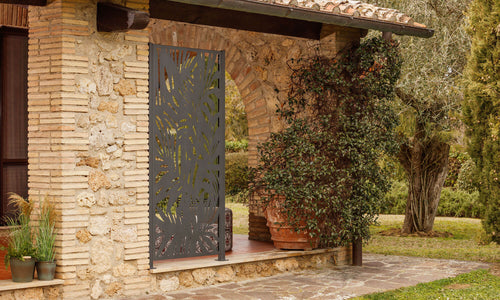
 Pictured: Ancona garden fence in powder-coated anthracite, installed on a wall.
It is understandable not to want to make a major investment prematurely. At the same time, the chosen solution should also last. The key questions are therefore: What is the actual cause of the problem? And how great is the risk that, once one weak point has been fixed, the next will appear immediately?
Replacing individual components – when it is worthwhile
Partial replacement may be worth considering as an interim solution in the following cases:
- Only individual fence elements are damaged, for example by a vehicle impact or vandalism, while the posts remain stable.
- The existing fence system is still commercially available, so accurately fitting replacement parts can be obtained without extensive modification.
- A redesign of the garden is already planned for the near future and the replacement is intended only as a temporary measure.
In practice, replacing individual components often proves difficult because the hole spacing, heights or fixing profiles of older systems are no longer compatible with current standards. A planned complete replacement usually produces a more harmonious and technically superior result.
Replacing fence posts – effort and costs
Replacing old fence posts is often the turning point. Posts are the backbone of the fence; they support the weight of the fence panels and absorb wind loads. The greatest effort lies not in the post itself, but in the foundation:
- Removal: Old concrete foundations have to be broken up laboriously using heavy equipment or excavated completely.
- New foundation: Depending on the ground conditions and fence height, a frost-depth pad foundation is required for lasting stability.
- Precise alignment: The new posts must be aligned exactly in line and at the correct height so that the fence panels can later be installed straight and without stress.
If several posts need to be replaced, moving to a complete replacement of the old fence is often only a small additional step, as the most labour-intensive work is already required.
When does complete replacement become more economical?
Complete fence replacement is generally the more economical option when at least two of the following criteria apply:
- More than one third of the posts are unstable, as this indicates a systemic problem with the foundations.
- The fence panels are visibly warped, sagging or affected by advanced corrosion or rot.
- Suitable replacement parts are no longer available or can only be installed with considerable modification.
- A general modernisation of the outdoor area is already planned in order to improve appearance, security and property value.
Repairs may appear inexpensive at first, but the combined cost of repeated labour, materials for temporary fixes and continuing depreciation often quickly exceeds the cost of a single, properly planned new investment.
Quick check: 5 questions to help you decide
- Are the posts loose or do the foundations show cracks?
- Does similar damage recur within 12 to 24 months?
- Are suitable replacement parts still readily available without modification?
- Does the overall appearance of the fence still meet your aesthetic expectations for the next 10 years?
- Would you like to reduce future maintenance, such as painting and repairs, rather than continue it?
Benefits of a new garden fence
 ELEO Express specialises in robust metal solutions in standard dimensions that enable reliable planning and fast implementation.
A new fence is more than simply replacing old materials. It is a deliberate investment in functionality, security and long-term cost control. Anyone who approaches garden fence replacement strategically benefits on several levels.
Greater security and stability
A sound, securely installed fence minimises risks. There are no loose parts, protruding screws or sharp edges. It also provides reliable protection in wind and storms. The difference in quality is especially clear with gates: a precisely aligned system closes accurately, moves smoothly and remains reliably functional for years. This increases safety for children and pets and protects the property.
Increasing the value of the property
The garden fence shapes the property’s kerb appeal – its first impression. A well-maintained enclosure that complements the style of the property signals care and increases the perceived quality of the entire home. This matters not only for your own quality of life, but also when selling or letting the property. Timeless designs and durable materials such as metal directly contribute to a high-quality overall appearance.
Why metal is the most durable choice
In everyday use, metal fences are particularly impressive because of their low maintenance requirements. Regular painting, concerns about rot in the posts and swelling edges become things of the past. Modern metal fences are optimally protected against corrosion by processes such as hot-dip galvanising and powder coating. They are resistant to pests, warping and UV radiation. For anyone looking for a durable, attractive and worry-free solution, metal is the most consistent choice.