

Key Takeaways
- The basis of any planning process is wind exposure, structural requirements and building regulations. These factors determine which furniture, planters and privacy-screen structures are feasible.
- Durable privacy-screen solutions made from metal or Corten steel are ideal for creating privacy and a clearly defined layout. They enhance the urban aesthetic and, as with ELEO Express, are often available at short notice.
- A combination of wind-resistant plants, flexible planters and well-designed lighting can transform even small spaces into functional, green retreats.
A roof terrace is more than just a balcony – it is an open space above the city's rooftops, offering far-reaching views, exclusivity, and exceptional design possibilities. At the same time, it places greater demands on planning, structural integrity, material selection, and maintenance than a ground-level garden. Anyone wishing to design their roof terrace therefore needs not only creative ideas, but also a sound understanding of the unique conditions found on a rooftop. This guide takes you from the first spark of inspiration through to practical implementation, presenting hands-on solutions for the right **privacy screen** on a roof terrace, inspiring planting ideas, and clever approaches to designing even small roof terraces without making them feel cramped.
What makes a roof terrace special – and how does it differ from a garden?
On the roof, design ambitions and structural reality meet head-on. Unlike in a garden, the substrate and its waterproofing layer are sensitive. Wind exposure is significantly higher, and sunlight is more intense due to the absence of shade-giving trees. A roof terrace functions like a stage: clean lines, a small number of impactful elements, and deliberately placed privacy screening immediately create an atmosphere of calm and order.
Challenges in the garden
- Soil conditions and drainage
- Growth of hedges and trees in the ground
- Wind is slowed by buildings and vegetation
- Large-scale, natural water absorption
Particular considerations on the roof
- Load-bearing capacity and point loads must be precisely planned
- The roof waterproofing must not be damaged under any circumstances
- Wind requires extremely stable, anchored elements
- Controlled drainage via outlets is essential
Wind load, structural load, and weight – the essentials first
The most fundamental rule when designing a roof terrace is: technical parameters first, aesthetic design second. Wind acts as an amplifier on the roof. Large, solid surfaces – such as tall privacy screens or sun sails – and tall planters generate enormous wind loads and act like sails if they are not professionally installed or adequately weighted down. Total weight is equally critical: substrate saturated with water in large containers, heavy floor coverings, furniture, and the live load of people can quickly add up to a considerable burden.
In practice, this means opting for fewer, but solid and well-anchored elements. A robust privacy screen, a substantial seating group, and one or two large planters create more structure and safety than a large number of unstable individual pieces. If there is any uncertainty regarding load-bearing capacity or permissible structures, consulting a structural engineer or speaking with the building management is essential. Clarifying the fundamentals at an early stage prevents costly mistakes.
Tenant or owner – what is permitted?
Whether it is a privacy screen, pergola, awning, or raised bed – many measures on a roof terrace have structural implications. For owners, resolutions passed by the owners' association and the provisions of the declaration of division are binding. Tenants generally require the landlord's consent as soon as fixed installations are made or the external appearance of the façade is altered. Local building regulations and fire safety requirements may also come into play, for example regarding the choice of materials or the height of partitions.
A tried-and-tested approach is to work with solutions that do not damage the roof membrane and can be removed without leaving a trace. This is where well-designed metal privacy screen systems demonstrate their strengths: they are robust, visually clean, and can often be integrated in such a way that the building fabric remains untouched – for example through weighting or clamp fixings.
Designing a roof terrace – styles and ideas
 To transform an empty surface into an atmospheric space, a guiding design concept is invaluable.
The best design ideas follow a consistent thread, in which materials, colours, and forms work harmoniously together. Less is often more: focusing on two primary materials (e.g. metal and wood) plus one accent material (e.g. concrete or textiles) creates a cohesive overall look.
Modern & minimalist – metal, concrete, and clean lines
A minimalist style is particularly striking on a rooftop, as the sky acts as an infinite "third wall" that opens up the space. Clean edges, neutral colours such as anthracite, grey, and white, and clearly defined zones create a sense of order. A streamlined roof terrace privacy screen made from powder-coated metal or Corten steel provides the framework. Large, cubic planters and a seating group with slender proportions complement the look. Rather than many small accessories, a few high-quality details make their mark: a coarsely woven throw, an outdoor rug with a graphic pattern, and a side table in powder-coated steel.
Urban jungle – plants as the main feature
The urban jungle style thrives on lush abundance, but one that is arranged with intention. On a roof terrace, this means grouping plants together, playing with varying leaf sizes and heights, and maintaining a unified colour palette for the planters. A mix of wind-resistant grasses (e.g. feather reed grass), hardy small shrubs, and evergreen accents such as dwarf pines is recommended for roof terrace planting. A well-considered irrigation system and zoning according to sun and wind exposure simplifies maintenance.
Mediterranean – warm tones and a southern feel
A Mediterranean feel is particularly well-suited to a roof terrace, where sun and warmth are more prominent. Warm terracotta, sand, and ochre tones harmonise with natural textiles, untreated wood, and woven furniture. In this context, Corten steel is an ideal partner: its warm, rusted patina works like a living design element, radiating warmth without appearing rustic. Combined with fragrant herbs such as lavender and rosemary – which tolerate wind and sun well – the result is the feeling of a small holiday retreat above the city.
Designing a small roof terrace – making the most of limited space
Designing a small roof terrace means assigning a clear function to every centimetre. The key lies in making intelligent use of the edges and keeping the centre clear. A slender privacy screen at the perimeter defines the space, while the central area remains free for movement. Folding furniture, a bench with integrated storage, and narrow, tall planters rather than wide pots maximise the usable area.
| Problem | Solution | Effect |
|---|---|---|
| Limited floor space | Vertical design: slender raised beds and privacy screen elements along the edges | The centre remains clear and the space feels more generous and uncluttered. |
| High wind exposure | Stable, firmly anchored elements rather than lightweight, loose decoration | Greater comfort in use and a sense of security in all weathers. |
| Visual clutter | Consistent material and colour concepts, recurring forms for planters | A calm, high-quality, and harmonious overall impression is achieved. |
Privacy screens on the roof terrace – seclusion in the city
Without privacy, even the most beautiful roof terrace goes unused. Particularly in densely built-up urban areas, views from neighbouring windows, higher floors, or adjacent buildings are ever-present. A well-planned privacy screen therefore not only creates a sense of shelter, but also a feeling of space: it defines zones, frames desired views, and gives the terrace a finished character.
Why a privacy screen is particularly important on the roof
On the roof, natural barriers such as trees or hills are absent. The exposed position often creates a feeling of vulnerability. A privacy screen serves a dual function here: it keeps unwanted views at bay and can simultaneously act as a windbreak. Rather than a continuous wall, it is often more effective to position the privacy screen selectively at the sensitive points: beside the seating area, the lounging zone, or the dining area. This saves material, reduces the surface area exposed to wind, and has a visually lighter appearance.
Metal and Corten steel – the quintessential urban privacy screen
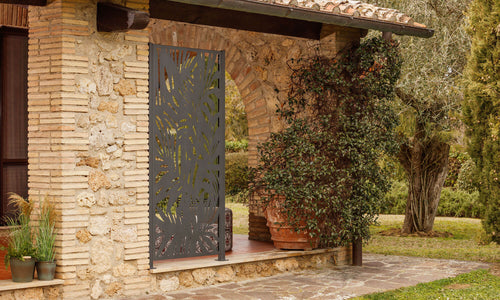
Metal is a versatile and robust material for the roof terrace: slim in profile, extremely stable, weatherproof, and architecturally precise. Corten steel adds a warm, living quality through its characteristic noble-rust patina. Anyone wishing to design their roof terrace with an urban look full of character will find metal elements an ideal foundation. They harmonise excellently with wood, exposed concrete, or lush greenery.
A decisive practical advantage: a solid metal privacy screen is extremely durable and dimensionally stable. It withstands wind and weather for years without warping, rotting, or losing its colour. At ELEO Express, suitable privacy screen elements are available that embrace this urban style and impress with their rapid availability.

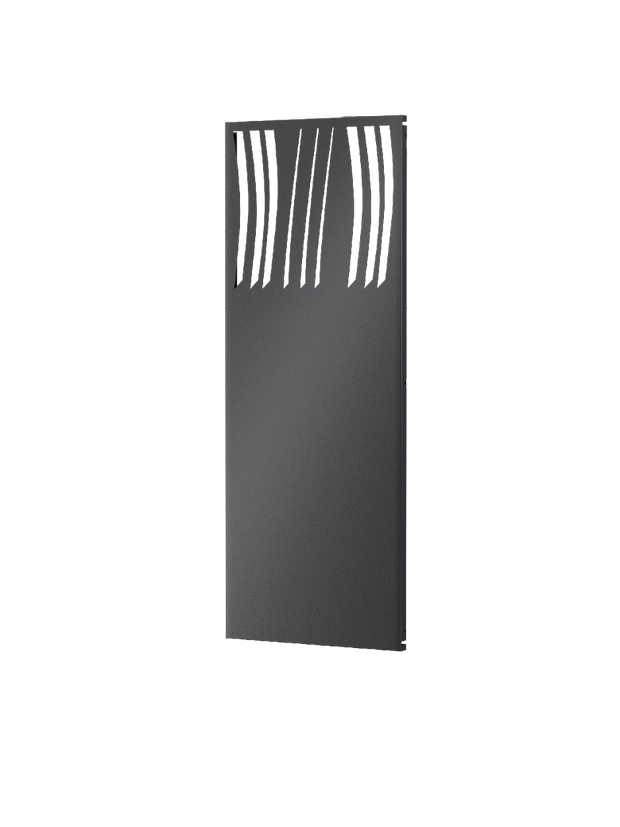


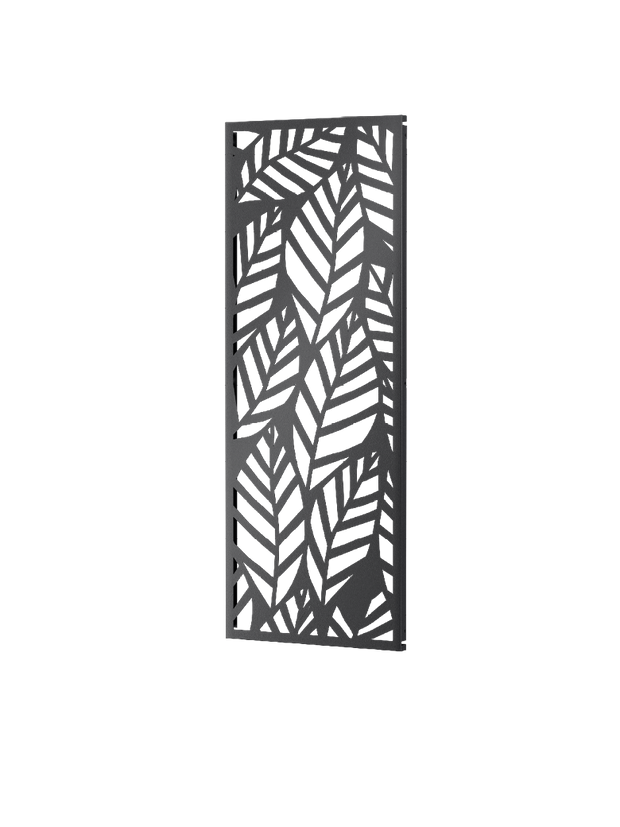
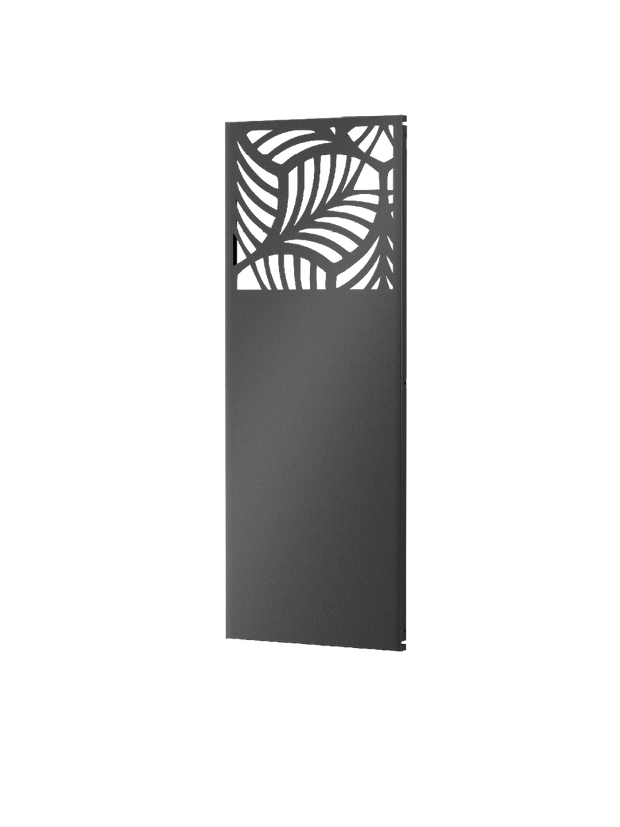


 Mediterranean roof terrace with a metal pergola, olive tree, and stylish outdoor hot tub.


