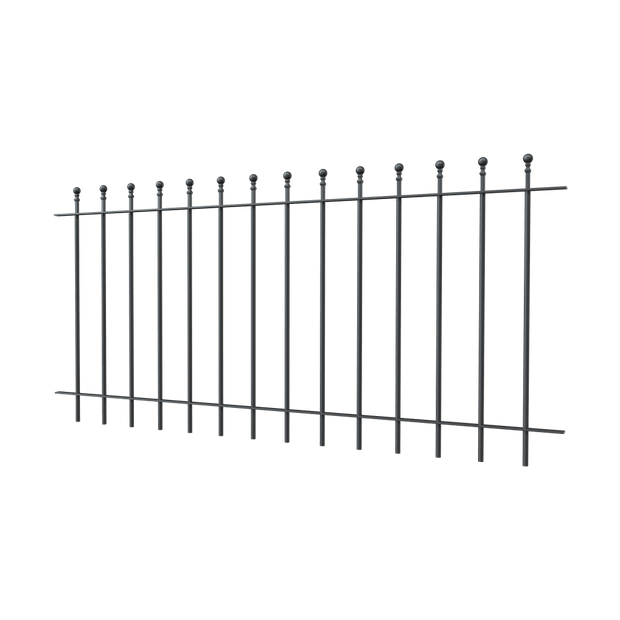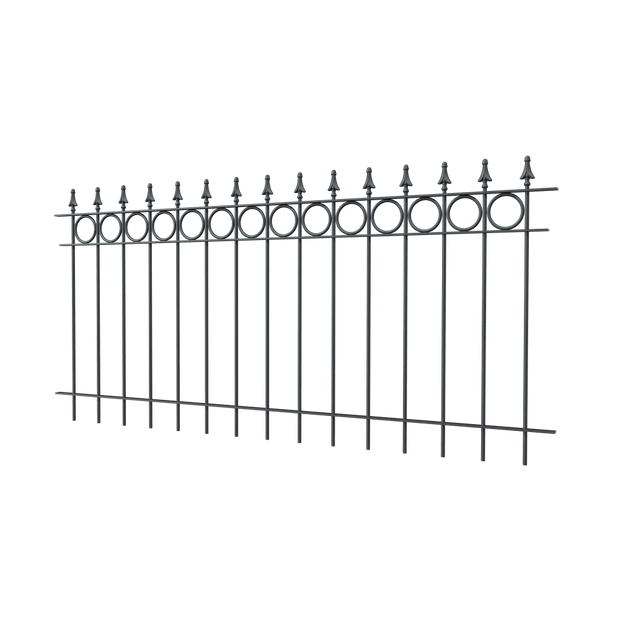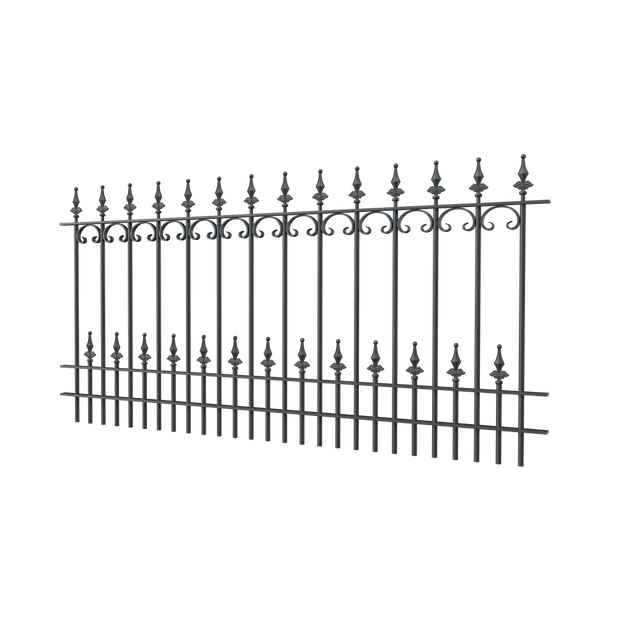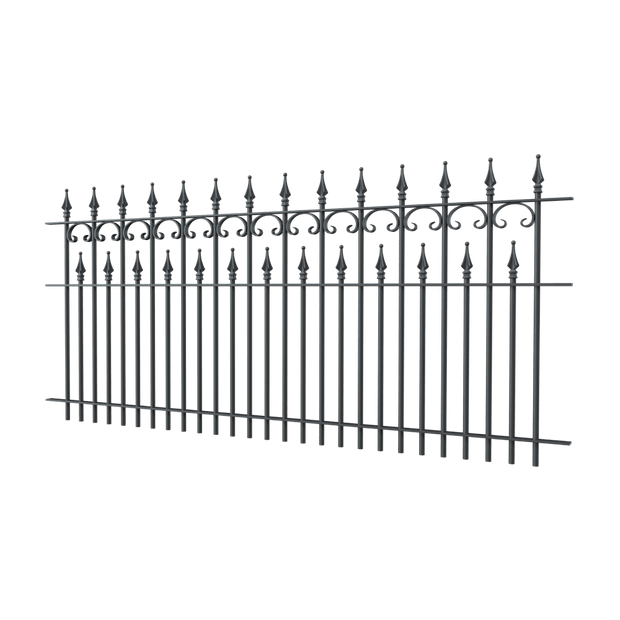

Key points at a glance
- Depending on the fence profile, a house number can be securely and visibly attached to a fence using cable ties, screws or clamping systems.
- For long-lasting results, weather-resistant materials, rustproof fixings and careful separation of different metals are important. ELEO metal fences provide a stable foundation for this.
A clearly visible house number is far more than an administrative necessity. It is the first calling card of your home, helps delivery services, visitors and, above all, emergency services find their way and completes the appearance of your property. Particularly if the house is set back from the road or surrounded by a front garden, attaching the house number to the fence is especially useful. This makes it clearly visible from the street and prevents it from being overlooked on a distant façade.
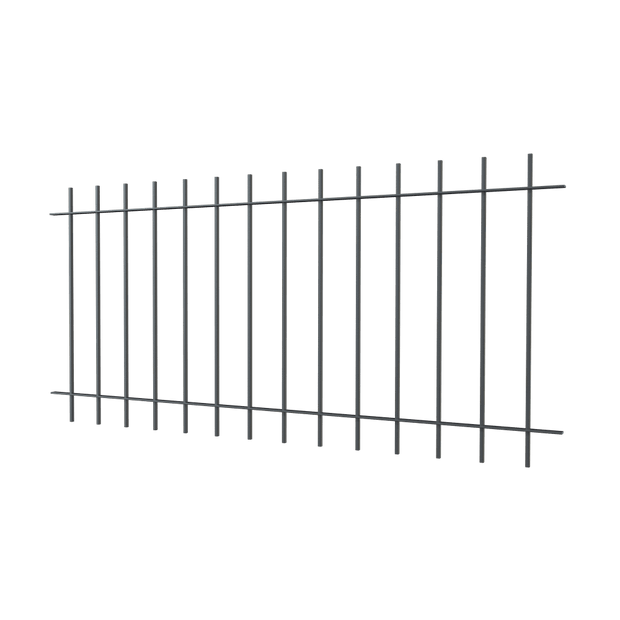
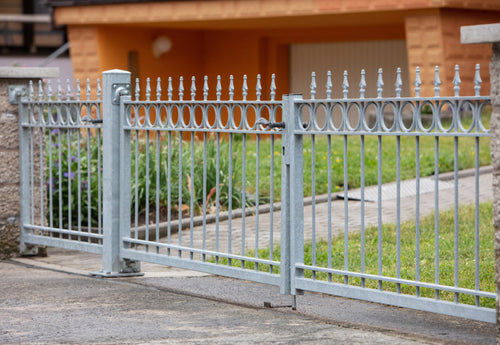
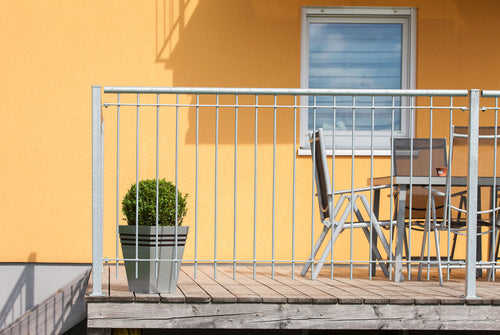
A high-quality metal fence provides the ideal foundation for this. Its sturdy bars, frame sections and posts allow a wide range of fixing methods that can be flexibly adapted to the design of the sign, the spacing between the fence bars and the desired level of permanence. Whether you opt for simple individual numbers or a traditional backing plate, the key factors are always secure fixing, excellent legibility and materials that can withstand the elements for many years.
What fixing methods are available?
If you want to attach a house number to a garden fence, you can choose from several tried-and-tested methods. The best solution depends on whether you want to make permanent changes to the fence, how the fence is constructed and how much the house-number sign weighs. A lightweight acrylic panel places different demands on the fixing than solid stainless-steel numbers. Location also plays a role: on a windy corner, the fixing naturally needs to be more robust than on a sheltered garden gate.
Cable ties – the temporary solution

Cable ties are the quickest and easiest answer to the question of how to attach a house number without drilling. They are threaded through existing holes in the sign and tightened securely around the fence bars. This method works particularly well with double-wire mesh fences, as the horizontal and vertical bars provide numerous fixing points.
They are ideal for temporary identification, for example during a construction phase, or for testing the perfect position. However, it is important to use only UV-resistant cable ties, often made from black polyamide 12. Conventional white cable ties quickly become brittle and break when exposed to sunlight. For a permanent and visually appealing house number on the fence, however, they are less suitable, as they lose tension over time and may cause rattling noises in strong winds. Use at least four fixing points and check the fit regularly.
Screws – the permanent fixing

A solid screw connection is the most reliable and professional choice for permanent installation. Depending on the fence construction, the house number can be screwed directly onto a flat steel section, frame or post. The aim is to create an absolutely secure connection that will not be loosened by wind or vibrations, for example when a gate is closed.
For metal fences, rustproof stainless-steel screws (e.g. A2 grade, or A4 near the coast or in industrial areas) are the best choice. Always use suitable washers and nuts. With a solid section, drill all the way through and secure the house number from the rear with a counter nut. After drilling, carefully deburring the holes is essential. Sharp edges must be smoothed and then sealed with a touch-up paint pen or zinc spray to restore the protective powder coating of the fence and prevent rust from developing.
Installation using small stainless-steel or plastic spacers between the sign and the fence looks particularly elegant. This spacing creates a subtle floating effect, improves legibility and prevents dirt or moisture from collecting behind the sign. Rainwater can drain away freely, further increasing the durability of both the sign and the fence.
Clamping systems – gentle fixing without drilling

Clamping systems are the perfect combination of stability and surface protection. They provide the secure hold of a screw connection without requiring the fence to be drilled. A bracket, often in the form of a clamp or U-bolt, is placed around a fence bar or post and screwed tightly into place. The house-number sign is then attached to this bracket. This method is ideal for high-quality, powder-coated metal fences whose surface should remain flawless.
Make sure you choose a clamp that precisely matches the cross-section of the fence profile. To protect the coating and maximise grip, a thin rubber or felt insert should be placed between the clamp and the fence. Clamping systems are a convincing, reversible solution that is also suitable for tenants or where the final position has not yet been decided.