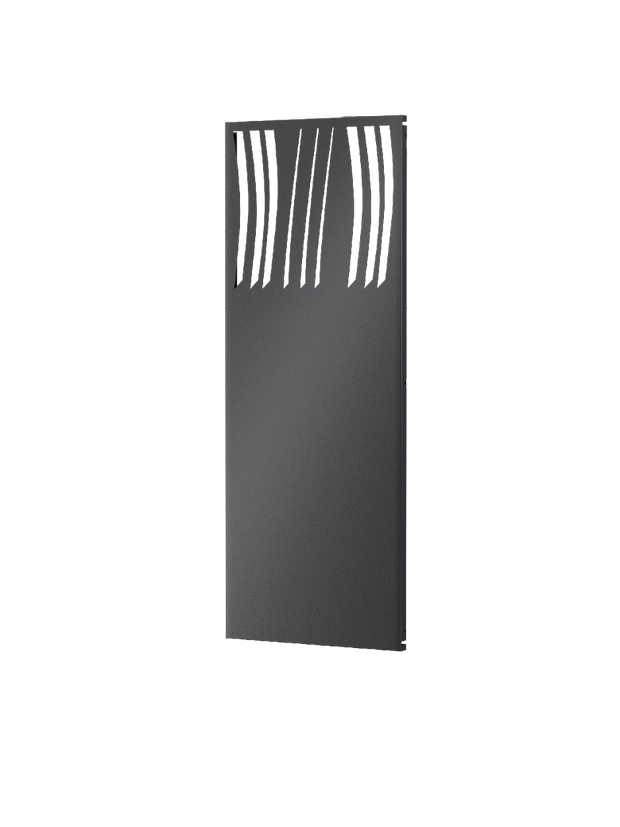
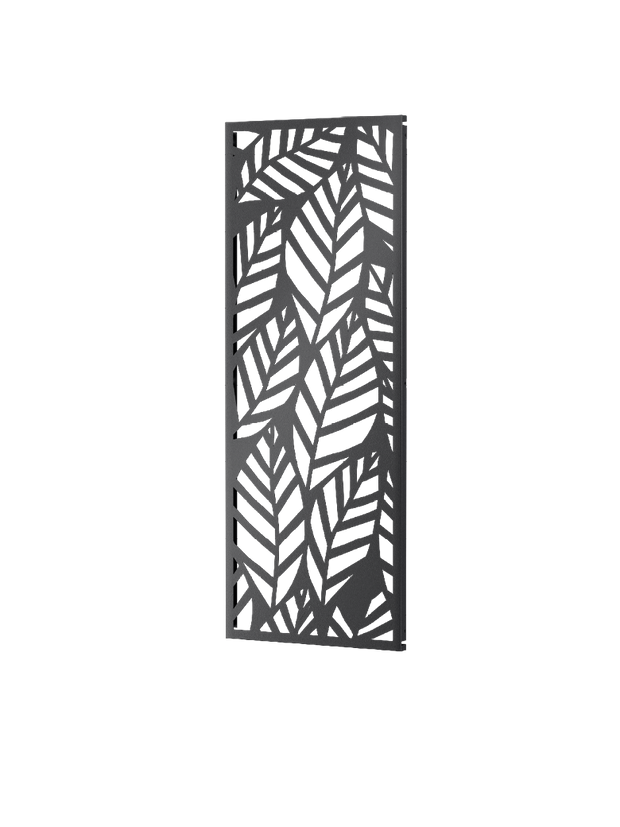
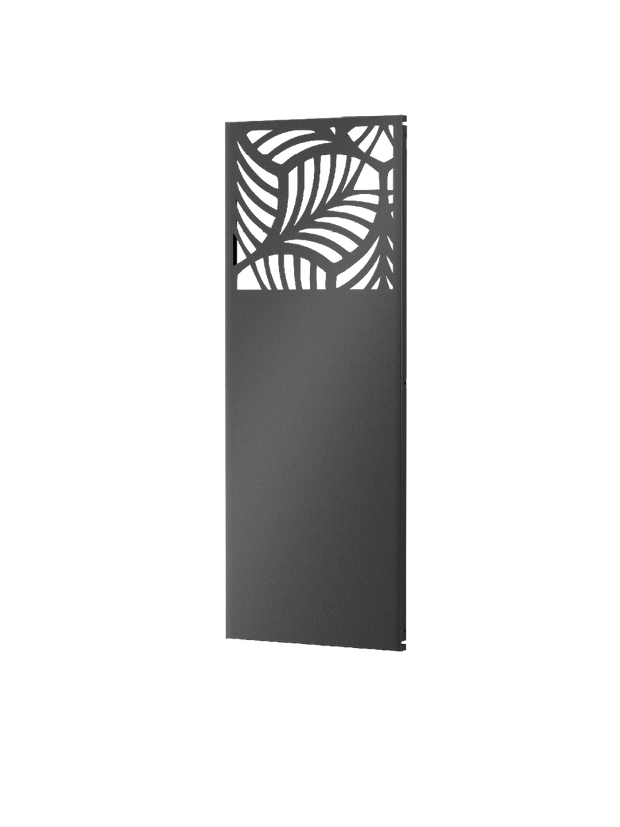
Privacy screens for swimming pools or hot tubs – ideas, materials and legal considerations
Our privacy fences
Published: 13 MAY 2024
Last Updated: 24 JUN 2026
Key Takeaways
A well-thought-out pool privacy screen creates privacy, acts as a windbreak, and ensures a harmonious overall look in the garden.
Resistance to moisture and chlorine is crucial in the pool area: durable metal panels are a low-maintenance and dimensionally stable solution, whereas wood requires more care.
Before installation, fence height, boundary distance regulations, and planning permission requirements must be checked to ensure the pool privacy screen is erected legally in relation to your neighbours.
Undisturbed time at your own pool or hot tub is a special luxury. A suitable privacy screen is more than just a barrier – it transforms the area into a private oasis of relaxation. However, the pool environment brings together special requirements: moisture, splash water, chlorine or salt, wind loads, and often small distances to the property boundary. This guide leads you step-by-step from the initial idea through material choice and legal foundations to professional installation. The goal is to find a solution that is stable in the long term, aesthetically pleasing, and functional.
Why a Pool Privacy Screen is Sensible
A pool privacy screen fulfils far more than just shielding you from inquisitive eyes. Properly planned, it enhances the quality of stay in the entire area in both functional and visual ways.
Functional Aspect
Practical Daily Use
Relevant Planning Note
Creating Privacy
Undisturbed bathing, sunbathing, and relaxing without being observed
Analysis of sightlines from neighbouring properties, paths, or windows
Wind and Weather Protection
Reduces water cooling and ensures more comfort on the sun lounger
Positioning relative to the prevailing wind direction and calculation of wind loads
Structure and Order
Hides pool technology, heat pumps, or unsightly covers
Maintenance access for technology and cleaning paths must remain clear
An additional, often underestimated advantage: a well-planned pool privacy screen towards the neighbour can prevent conflicts proactively. Early coordination regarding height, placement, and design creates clarity and ensures a good neighbourly relationship.
Comparison of Materials – Which Privacy Screen Lasts at the Pool?
In the direct vicinity of a pool, aesthetics are not the only deciding factor. The material must withstand splash water, permanent moisture, UV radiation, and chlorine-heavy air. Stability, maintenance effort, and the possibility of later expansion also play a central role in choosing the right solution.
Metal & Corten Steel
Metal solutions are considered the most durable and low-maintenance choice in the pool environment. They remain dimensionally stable and allow for precise installation. Especially in modern gardens, powder-coated metal panels create a clear, calm, and architectural aesthetic that emphasises the pool as a design element.
Longevity: Hot-dip galvanised and powder-coated steel is extremely robust and resistant to corrosion, even when in contact with chlorine.
Maintenance: The smooth surfaces are easy to clean and offer almost no surface for algae or dirt to take hold.
Corten Steel: Forms a characteristic, protective rust patina. This "elegant rust" look gives the garden a warm, natural, and simultaneously modern note. The patina stabilises after a while so that no rust run-off occurs.
For a low-maintenance and permanent solution, metal privacy panels are ideal. They allow for clean lines and can be easily extended if necessary without the overall appearance becoming inconsistent.
WPC (Wood Plastic Composite) is a popular alternative as it combines the look of wood with lower maintenance requirements. At the pool, WPC provides a warm, homely atmosphere without the need for annual staining or painting.
Properties: Relatively easy to maintain and available in many colours. The look is very uniform.
To Note: Quality differences are significant. Solid boards are more stable than hollow-chamber profiles. In intense sunlight, dark WPC can heat up significantly and the colour may lighten slightly over the years.
Installation: A stable and correctly dimensioned substructure is crucial to avoid warping.
Wood
Wood is the classic choice for natural garden design. It blends harmoniously into green surroundings and pairs well with timber decking. However, in the damp pool area, wood is the most maintenance-intensive material.
Aura: Creates a warm, organic atmosphere and can be excellently combined with plants.
Disadvantages: Requires regular maintenance with stains or oils to protect it from greying, rot, and algae infestation. There is a risk of warping and cracking.
Suitable Wood Types: Woods with a high natural content of oils and resins, such as Siberian Larch, Douglas Fir, or Robinia, are more resistant than Spruce or Pine.
Plants & Hedges
A living hedge creates a natural and soft boundary. It is ideal if the privacy screen should not be perceived as a structure but as an integral part of the garden. However, hedges need time to grow, sufficient space, and regular trimming.
Advantages: Natural look, improved air quality, acts as a sound damper, and creates a pleasant microclimate.
Challenges: Leaves, blossoms, and needles can get into the pool and the filter system. Root pressure can threaten the pool structure if the distance is too small.
Plant Selection: Evergreen, prune-tolerant plants such as Yew, Cherry Laurel, or narrow-growing Thuja varieties are well-suited. Bamboo is only recommended with a rhizome barrier.
A greened pool ensures a special, shielded bathing experience. Image source: unsplash.com, Shing
Privacy for the Hot Tub – What’s Different?
A hot tub is often placed close to the house, on the terrace, or even on a roof terrace. This changes the requirements: space is more limited, views often come from above (windows, balconies), and the chemical stress from warm, rising aerosols is more intense. A hot tub privacy screen should therefore not only be opaque but also particularly material-resistant and cleverly constructed.
Material Choice for Chlorine Exposure
The warm, moist air above the hot tub transports disinfectants like chlorine. This places high demands on the material. Smooth, non-porous, and high-quality coated surfaces have a clear advantage here, as they are easy to clean and offer almost no target for deposits or corrosion.
Coated metal panels and other weather-resistant systems are a very robust solution. They remain dimensionally stable and are insensitive to permanent moisture. For wood, the increased maintenance effort must be realistically factored in, as the surface in direct proximity to the hot tub is constantly damp.
Modular Solutions for Small Spaces
Many hot tub privacy ideas must work in confined spaces. Modular systems are perfect for this. Height and length can be flexibly adjusted to the floor plan, corners can be cleanly formed, and individual elements can be retrofitted if needed. Partial solutions are also sensible: opaque only on the side visible to others and more open towards the weather side to avoid wind turbulence.
Urban retreat on the roof terrace – where thoughtful construction and opaque design transform the hot tub into a protected wellness oasis.
Solution for Small Areas
Short, high privacy elements in an L-shape can be sufficient if views only come from one direction. Clear access to the entry and the maintenance hatch must be guaranteed.
Integration into Terrace Areas
The privacy screen can serve as a structural room edge that visually connects the hot tub, loungers, and seating area. A consistent material line creates calm and order.
Pool Privacy Screen Towards the Neighbour – What is Allowed?
When it comes to a pool privacy screen towards the neighbour, legal requirements play a significant role. Fence heights, boundary distances, and planning permission requirements are regulated differently depending on the region and local council. A privacy screen may be legally classified as a "boundary wall", "privacy fence", or "structural installation", which has consequences for height, location, and potential consent requirements.
Note: This article does not constitute legal advice. It serves to identify the relevant questions for clarification with your local planning authority.
Fence Height and Boundary Rules
The most common points of conflict are height and proximity to the boundary. Local building regulations and planning schemes may contain exact specifications regarding materials, heights, or the appearance from the street side.
Typical Regulations (Examples):
Standard Boundary Fence (approx. 1.8m - 2m): Usually permitted at the rear/side boundary without specific permission, but this varies.
Privacy Wall (up to 2m): Often requires a minimum distance to the boundary or the neighbour's consent if placed directly on the line.
Taller Installations (> 2m): Frequently require formal planning permission.
Boundary Line: The exact course of the boundary should be clarified before setting posts to avoid later corrections.
A practical approach is to plan the privacy screen so it fulfils its purpose without appearing unnecessarily high or massive. Strategic positioning that specifically closes off a sightline is often more effective than maximum height along the entire length.
When is Planning Permission Needed?
Whether planning permission is required depends on the height, length, and location of the installation. While standard boundary treatments are often permitted development, special cases can become relevant:
Corner Plots: Here, regulations for visibility at road junctions can restrict height and placement.
Conservation Areas / Listed Buildings: In these areas, materials or colour schemes may be strictly prescribed.
Ground Levelling: If the ground level was changed (raised), the "effective height" of the privacy screen may be assessed differently.
In case of uncertainty, an enquiry with the local planning department is the safest route. Especially for large-scale, closed elements, legal clarification in advance is advisable.
Quick-Check: 5 Questions Before Buying
From which directions (neighbour's window, path, balcony) do the primary views come?
What height is required to interrupt these specific sightlines?
What boundary distance must be maintained according to local regulations?
Which material resists moisture and pool chemicals in the long term with acceptable maintenance?
How is the installation done (foundations, bolting down) and how is the wind load at the site to be assessed?
Installation & Common Mistakes
The best planning is ineffective if the privacy screen is unstable, warps, or makes noise in the wind. In the pool area, aggravating factors are added: the ground is often heterogeneous (terrace, lawn), there are splash zones, and sensitive components like the pool liner or technical lines in the ground.
Fixing on Terrace, Lawn, and Wall
The choice of fixing method depends on the surface. The forces occurring must be safely transferred into load-bearing layers.
Terrace (Concrete/Stone): Screw-on post bases are an option if the concrete slab or foundation underneath is sufficiently dimensioned. For light paving, separate point foundations are the more stable choice.
Lawn/Earth: For a permanently stable anchor, concrete-in H-anchors or direct concrete foundations (frost-proof, approx. 80 cm deep) are essential.
Wall/Parapet: Wall fixings require a static check of the base. Ensure that no waterproof membranes or the building structure are damaged.
In the pool environment, precise localisation of pipes buried in the ground (electricity, water) before digging foundations is essential.
Protecting Against Wind Loads and Pool Liners
Large, closed elements act like a sail. This wind load is often underestimated. Two principles should be observed:
Stability Over Surface Area: Better to have a few, solidly anchored elements than one long, unstable wall. In windy regions, models with perforations or louvred structures are advantageous as they reduce wind pressure.
Distance to the Pool Edge: Installation should be done so that sharp edges, screws, or fixing parts cannot come near the sensitive pool liner or the cover.
Rattling noises are usually caused by imprecise connections. High-quality plug-in or panel systems made of metal score points here through custom-fit manufacturing and stable construction.
DIY or Professional – When is a Specialist Worth It?
Many privacy projects are feasible as DIY, provided precise measurement, careful ground preparation, and exact alignment are guaranteed. A specialist company is particularly sensible if:
Height differences in the terrain or a slope need to be compensated.
The privacy screen is very tall or long and wind load plays a critical role.
Statically secure wall mounting on a masonry wall or parapet is required.
The legal situation at the property boundary is complex.
Professional installation saves time and ensures that the pool area is quickly back to full use.
Pool Privacy Ideas – Inspiration for Every Style
When it comes to pool privacy ideas, it’s about more than just functionality. As the largest vertical surface, the privacy screen decisively shapes the atmosphere of the entire garden. It should therefore stylistically match the house, the terrace, and the pool shape, rather than appearing as a foreign object.
Modern & Minimalist
Clean lines, calm colours (e.g. Anthracite Grey RAL 7016), and a reduced design language characterise this style. Metal panels are ideal here, as they set architectural edges and combine perfectly with large-format concrete tiles or puristic timber decks. The privacy screen can serve as a frame for the lounging area and elegantly hide the pool technology.
Use continuous height lines and uniform materials.
Create targeted openings or perforated elements to provide transparency and reduce wind load.
Indirect lighting, e.g. through integrated LED strips, showcases the area in the evening.
Mediterranean with Corten Steel
Corten steel brings a Mediterranean note to the pool area with its warm rust patina. The earthy hue harmonises excellently with natural stone, gravel areas, and drought-tolerant plants like lavender or rosemary. As a pool privacy screen, Corten steel can help to visually ground large water surfaces and avoid a cold effect.
Conscious placement is crucial. Corten steel is a strong statement and should be combined with calm materials. If the hue is repeated in planters or other garden details, a harmonious and planned overall look is created.
Natural – WPC Combined with Plants
For a soft, organic atmosphere, a mix of materials is suitable. WPC or metal can form a stable and low-maintenance base structure, while climbing plants such as Clematis or Virginia Creeper provide liveliness. This combination also offers some privacy in winter and allows you to control the planting so that fewer leaves fall into the pool.
During planning, a narrow maintenance zone between the privacy screen and the pool edge is recommended. It facilitates the pruning of plants and the cleaning of the wall.
Urban – Privacy for the Roof Terrace Hot Tub
On a roof terrace, wind, views from above, and the weight of the construction are the central challenges. A hot tub privacy screen should act as an intelligent wind and sight filter here, rather than a massive wall. Lightweight, modular elements made of aluminium or perforated steel are ideal, as they can be adapted to parapets and reduce wind turbulence.
Low-maintenance materials are particularly important in exposed locations. The construction must ensure unobstructed water drainage, avoid waterlogging, and be securely fastened to the substructure or parapet.
What height is sensible for a pool privacy screen in practice?
The optimal height depends on the specific sightlines. Views from a higher neighbouring window require more height than views from the side. In many cases, a height of 1.80 m to 1.90 m is sufficient to interrupt the line of sight when standing. A lower construction often appears lighter, is less problematic regarding wind, and is legally easier to implement. It is advisable to check local building regulations for the maximum permissible height.
Which material is best suited for a hot tub privacy screen given moisture and chlorine?
In the direct vicinity of a hot tub, surfaces that are insensitive to permanent moisture and chlorine-heavy vapours and are easy to clean are ideal. High-quality coated metal solutions are very robust and low-maintenance here. WPC is an alternative for a warmer look. Wood is possible but requires significantly more maintenance in direct proximity to warm water to remain attractive in the long term.
How can disputes over a pool privacy screen with a neighbour be avoided?
Conflicts are best avoided through transparency and compliance with legal frameworks. This includes exact determination of the boundary line, adherence to permissible heights and distance rules, and obtaining any necessary permissions. Early and open communication with the neighbour about the planned project can clear up many misunderstandings. A high-quality, aesthetic design is also more likely to be accepted than an improvised solution.
Careful planning that takes material, design, and legal aspects into account is the key to a long-lasting and satisfactory result. Modular and weather-resistant systems offer the flexibility to create a tailored solution for the special requirements in pool and hot tub areas.
Discover our long-lasting metal privacy solutions and find the right design for your garden!
The Key Facts at a Glance A garden fence offers the ideal stage for atmospheric autumn décor outdoors – from glowing pumpkins to elegant wreaths. Particularly sturdy metal fences, such...
Metal privacy screens for outdoor showers: tips on planning, location and materials. Discover durable privacy screen solutions in Corten steel and anthracite from ELEO Express.
Subscribe to our newsletter & secure £25*!
The newsletter voucher can be redeemed once with a minimum order value of £250.