
Key points at a glance
- A garden gate with a lock is essential for protecting a property from unauthorised access and maintaining privacy. It protects not only property, but also private retreats.
- The basis for a secure, lockable garden gate is a stable gate system. High-quality metal gates from ELEO Express provide the ideal foundation for retrofitting a suitable lock to suit individual requirements.
A garden gate is more than just a visual boundary. It marks the transition between public space and a private retreat and plays a central role in the security and appearance of a property. To fulfil this function reliably, it must not only be stable but also close securely. A high-quality lock prevents unauthorised access, protects valuables stored in the garden such as bicycles or tools and ensures that children or pets cannot leave the property unattended.
Whether you are planning a new gate system or want to upgrade an existing gate – there is a suitable locking solution for every requirement. The choice depends on the construction of the gate, how frequently it is used and the weather conditions at the location. When retrofitting a garden gate lock, it is essential that the lock, gate leaf, frame and posts form a harmonious and robust unit. Only then can you create protection you can rely on.
What types of locks are available for garden gates?
Various systems are available for a garden gate with a lock, differing in terms of installation, security level and ease of use. For modern metal gates, a solution integrated into the frame is the most elegant and secure choice, as all components are precisely matched to one another. For simple garden gates or temporary solutions, an externally mounted lock can also be a practical option.
Mortice lock

The better the lock and gate frame are matched to one another, the more reliably the locking mechanism works in everyday use.
A mortice lock for a garden gate is the most common and secure option for gates with a hollow-section frame. It is fitted into a specially designed recess, known as the lock case, in the gate frame and is therefore optimally protected against the weather and tampering. Only the handle, cylinder and surrounding plate are visible from the outside, creating a clean, uncluttered appearance and minimising potential points of attack.
The operating principle is as proven as it is effective: when the gate is closed, the latch – the bevelled part of the bolt – engages with the strike plate on the post and keeps the gate closed. Turning the key extends the solid main deadbolt, locking the gate securely. This combination offers a high level of convenience in everyday use. When purchasing, important dimensions such as the backset (distance from the front edge of the faceplate to the centre of the keyhole) and the centres (distance between the centre of the handle and the centre of the cylinder) must match the gate exactly. The DIN handing (opening to the left or right) must also be taken into account to ensure that the latch works correctly.
Door lock

Especially with frequently used garden gates, ease of operation plays an important role alongside security.
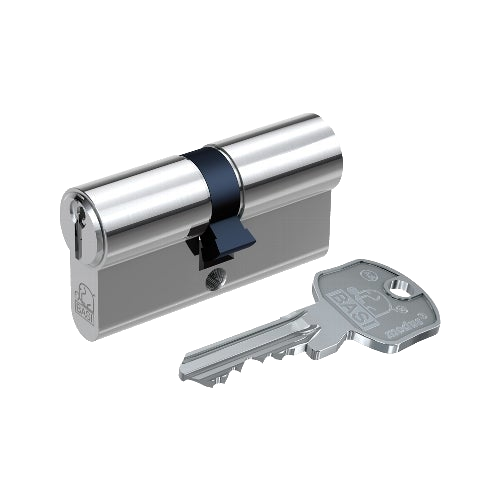
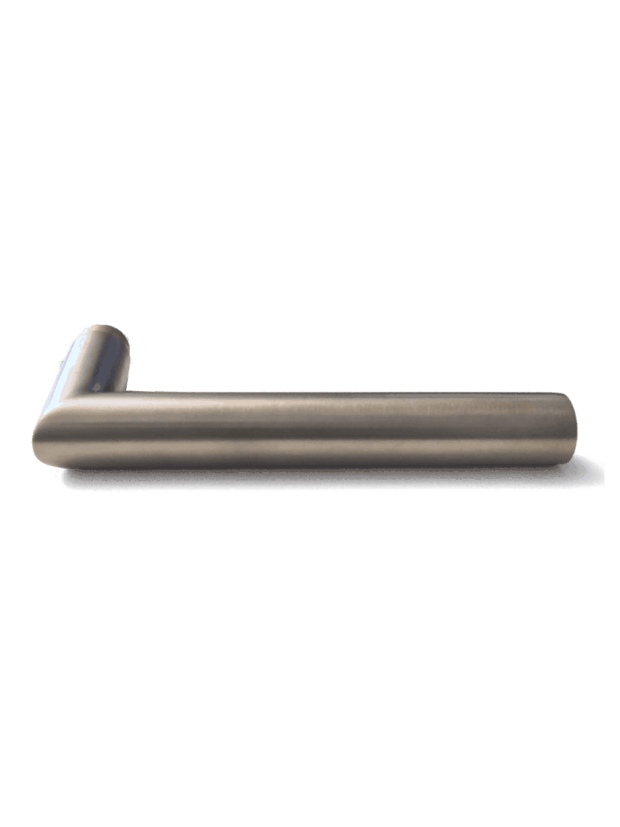
The term door lock for a garden gate often describes the complete locking system, whose function and construction are similar to a lock for a house door or side entrance. It consists of the mortice lock as the core component, a profile cylinder for locking, a handle set for operation and the matching strike plate on the opposite post. This complete solution is ideal for main entrances that are used every day, such as the path to the front door or access to the driveway.
The major advantage is the high level of convenience and the option of system integration. A high-quality profile cylinder can often be configured as part of a locking system. This allows you to operate the garden gate, garage and front door with just one key (“keyed alike”). When choosing a system, look for weather-resistant materials such as stainless steel or brass and a security escutcheon that provides additional protection for the cylinder against drilling or snapping.
Padlock with fitting

A padlock with a sturdy fitting offers a simple way to make a garden gate lockable retrospectively.
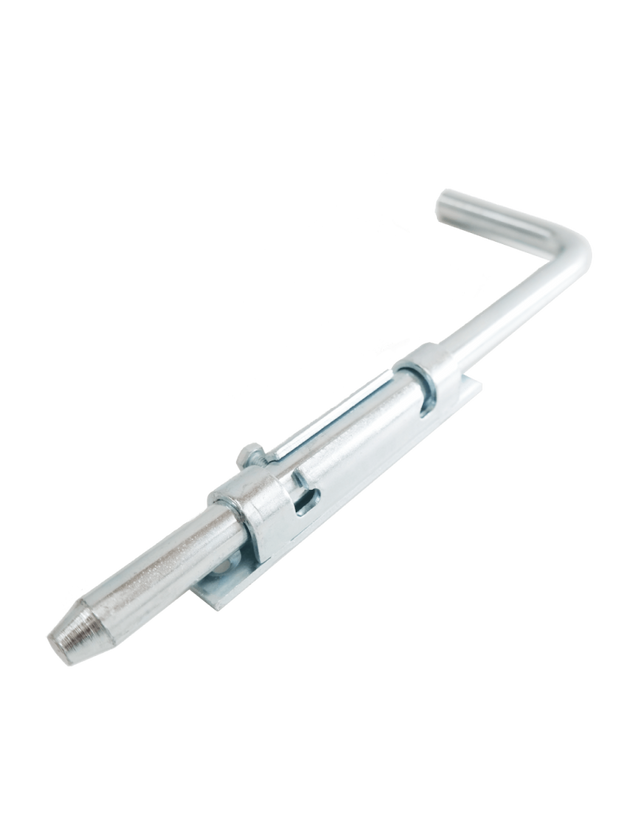
A padlock is a simple and flexible solution, particularly when a garden gate needs to be made lockable retrospectively and there is no lock case. Sturdy fittings such as eyelets or a hasp are fitted to the gate leaf and post. The padlock secures these two elements together.
This method is well suited to gates that are used less frequently, such as access to a tool shed or a rear garden area. The level of security depends heavily on the quality of the padlock and the strength of the fitting. Choose a solid lock with a hardened shackle and a fitting where the screws are concealed when closed to make dismantling more difficult. The disadvantage is the lower level of convenience and often less elegant appearance compared with integrated solutions.
Making a garden gate lockable – what you need to consider

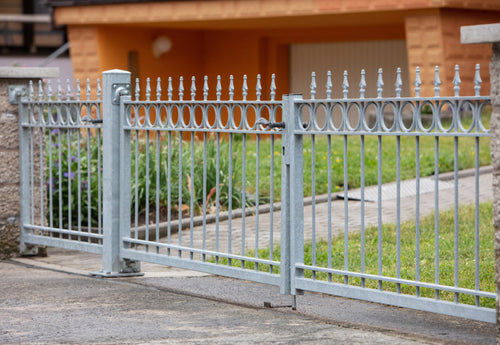
The Lugano garden gate from ELEO combines the characteristic metal look with a sturdy foundation for a secure locking solution.
Making a garden gate securely lockable requires a holistic approach. An expensive lock can only be effective if the foundation is right. While a solid metal gate with a prepared lock case can usually be retrofitted easily, lightweight wooden gates or simple mesh gates often require additional reinforcement to the frame.
Gate material and stability
The stability of the entire system is crucial. A lock can only provide as much resistance as the components in which it is anchored. High-quality hot-dip galvanised steel gates, such as those from ELEO Express, provide an excellent foundation thanks to their robust frame sections and precise manufacturing. Before retrofitting a lock, check the entire gate structure:
- Movement: Does the gate open and close smoothly or does it drag along the ground?
- Alignment: Is the gate leaf hanging straight or is it leaning? Does it close flush against the post?
- Anchoring: Are the posts firmly anchored in the ground and are the hinges free from play and stable?
Loose posts or worn hinges must be repaired before installing the lock. Only when the gate is perfectly adjusted can the bolt engage cleanly and without tension in the strike plate.
Weather protection for the lock
A lock on a garden gate is exposed to the elements all year round. Rain, snow, frost and UV radiation can affect the mechanism. Therefore, only use products designed for outdoor use. Corrosion-resistant materials such as stainless steel (V2A or V4A in coastal areas) are the first choice. A cylinder cover or long backplate that protects the lock from direct rain can significantly increase its service life. Regular maintenance is essential: do not lubricate moving parts with oil that can gum up, but use special care products such as graphite or PTFE spray instead. This keeps the mechanism smooth and resistant.
Retrofitting a garden gate lock – how to do it
With good preparation and the right tools, retrofitting a lock is straightforward on many gates. Particularly with sturdy metal gates, security can often be improved considerably if the entrance was previously secured only by a simple bolt or latch.
Choosing the right lock
Precise measurement is the first and most important step. Take the time to determine the following dimensions if you intend to use a mortice lock:
- Lock case dimensions: Height, depth and width of the existing recess or the recess to be created in the gate frame.
- Backset and centres: Suitable for the gate and the planned handle set.
- Faceplate dimensions: The visible plate of the lock must match the width of the gate section.
- Opening direction: Determine whether you require a DIN left-hand or DIN right-hand lock.
Also consider how the gate will be used. For a prestigious main entrance, a convenient door-lock system is the better choice, while a robust bolt with a padlock may be sufficient for a side entrance.