Privacy screen

Hide Compost in the Garden: How to Do It Stylishly with the Right Privacy Screen

Published: 12 AUG 2026
Last Updated: 20 AUG 2026
Kompost im Garten verstecken: So gelingt es stilvoll mit dem passenden Sichtschutz


Key Takeaways

  • A metal privacy screen integrates the compost area into the garden design in a durable, low-maintenance and aesthetically pleasing way without making it appear dominant.
  • For an effective composting process, air circulation, sufficient spacing and easy accessibility are essential. Metal privacy screens from ELEO Express combine these functional requirements with modern design.


A compost heap is at the heart of sustainable gardening. It transforms organic waste into “black gold” – nutrient-rich humus that enriches the soil and supports healthy plant growth. Yet as valuable as its contents may be, its appearance rarely matches the vision of a neat and harmoniously designed garden. The desire to hide the compost is therefore widespread. The good news: functionality and aesthetics do not have to be mutually exclusive. With a well-designed privacy screen solution, this practical working area can be seamlessly and stylishly integrated into the overall garden concept.

In particular, metal privacy screen elements offer an impressive balance of design and durability. They create a clean, understated frame that allows the compost area to visually recede without compromising essential functions such as ventilation and accessibility. In this way, an unattractive corner becomes a defined and structured part of the garden.


Why hide the compost heap?

The decision to screen off a compost area is primarily an aesthetic one. An exposed heap containing garden and kitchen waste at different stages of decomposition creates visual clutter. This can disrupt the overall appearance of a carefully designed garden, especially when the compost is visible from the patio, living room window or garden paths. A clear separation between leisure and working areas contributes significantly to a more relaxing atmosphere.

Anyone looking to hide compost in the garden achieves more than just a visual improvement. Targeted screening adds structure and order to the garden. It defines different zones and directs attention towards design highlights such as flower beds, water features or sculptures. In modern, minimalist gardens, where every line matters, an exposed compost corner can easily disrupt the overall look. A suitable privacy screen blends into the design and creates a cohesive, tidy appearance.

In addition, an enclosure can provide protection from the wind and clearly define the area – particularly practical in gardens with children or pets. One thing remains important: the screening must not suffocate the compost, but should function as a breathable and accessible enclosure.

Metal privacy screens – the stylish and durable solution

The decorative Tanaro privacy screen made of metal creates a premium look while providing a durable, low-maintenance solution around the compost area.


While traditional solutions such as hedges or wooden walls come with certain disadvantages, metal has established itself as a superior material for screening a compost heap. It combines a delicate or clean appearance with exceptional durability and minimal maintenance. A metal privacy screen looks attractive all year round, does not age unsightly and can be precisely adapted to the design requirements of the garden.

Unlike a hedge, which takes years to grow dense and requires regular trimming, a metal privacy screen provides complete and permanent screening from day one. It requires no watering, fertilising or annual pruning – a clear advantage for anyone looking for reliable privacy without recurring maintenance.

The following sections explain the specific qualities that distinguish a high-quality metal privacy screen.

Stability and weather resistance

The environment around a compost heap presents a challenge for any material. Moisture from the composting process, rain, irrigation water and direct contact with the ground can significantly affect wood. It can warp, rot, develop fungal growth and requires regular protective coatings. A high-quality metal privacy screen for a compost heap is unaffected by these problems. Steel retains its shape and easily withstands mechanical stress, such as a wheelbarrow being leaned against it. Thanks to modern finishing processes, it is also permanently protected against the effects of wind and weather, making it a one-time investment that retains both its function and appearance for decades.

In short: a metal privacy screen withstands moisture, frost and mechanical stress without losing its stability.

Low maintenance thanks to hot-dip galvanising and powder coating

The durability of metal privacy screen elements is based on a two-stage protection system. First, the steel is hot-dip galvanised. During this process, the component is immersed in a bath of molten zinc, creating an inseparable alloy layer. This coating reliably protects the steel core against rust, even if the surface is scratched. A powder coating is then applied. The powder is electrostatically charged, adheres evenly to the surface and is cured at high temperatures. The result is an extremely durable, smooth and impact-resistant surface that is UV-resistant and retains its colour.

This keeps maintenance to a minimum – occasional cleaning with water and a mild detergent is sufficient, while repainting, as required with wood, is completely unnecessary.


Discover low-maintenance metal privacy screens from ELEO

Modern design in anthracite or custom colours

Metal offers enormous design freedom. The cool elegance of powder-coated steel in anthracite (similar to DB 703) is particularly popular, as this dark, neutral shade provides a subtle backdrop for green plants and blends seamlessly into modern architectural concepts. It harmonises beautifully with paving stones, wooden decking and façade elements. Those who prefer to add colourful accents can choose from a wide range of custom colours to coordinate the privacy screen with other garden features.

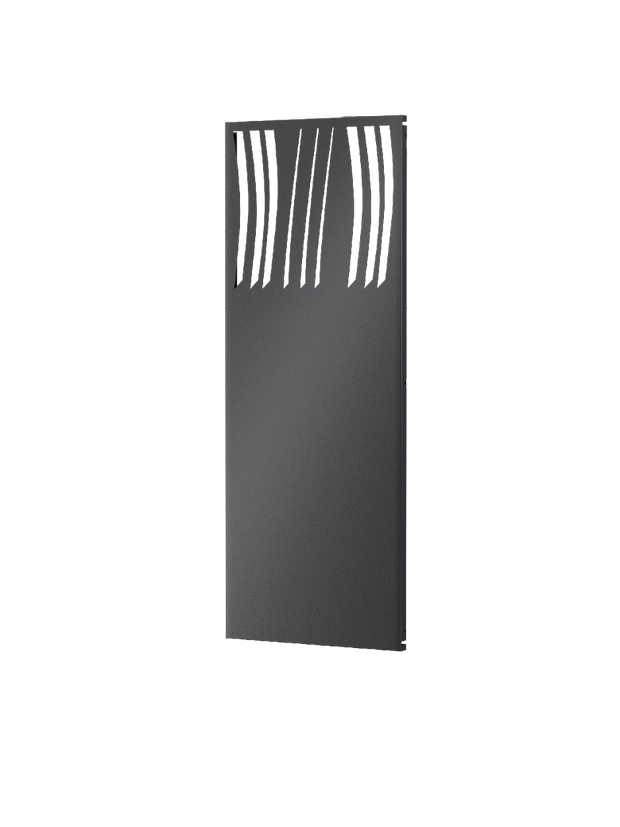
The design itself is also versatile: closed panels provide maximum privacy, while laser-cut patterns or bars create a lighter appearance and interesting plays of light and shadow.


Planning your privacy screen correctly – without disrupting the composting process

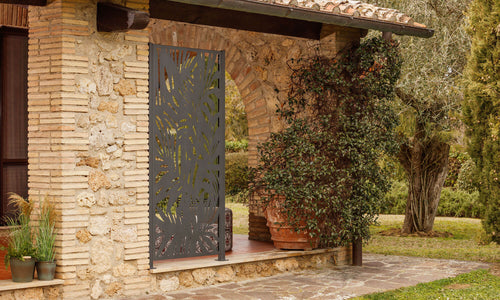
The decorative Panaro privacy screen discreetly conceals the compost and blends harmoniously into the garden design.

Even the best enclosure is of little use if it interferes with the biological processes taking place in the compost. Planning a privacy screen that successfully conceals a compost heap must therefore always take functionality into account. Ventilation and accessibility are the key criteria for successful composting.

A common planning mistake is positioning the privacy screen too close to the compost or enclosing it completely in an effort to achieve maximum discretion. The result is often the exact opposite of what is intended: trapped moisture, unpleasant odours and a slower decomposition process. Knowing these potential pitfalls makes it possible to avoid them from the outset.

The following two factors should be at the heart of the planning process.

Ensure sufficient ventilation

The composting process is aerobic, meaning that the microorganisms involved require oxygen to live and work. If the air supply is restricted, the process becomes anaerobic (oxygen-free). This can result in rotting, unpleasant odours and significantly slower decomposition. A privacy screen should therefore never seal off the compost completely. Sufficient distance between the compost heap and the privacy screen is essential – as a rule of thumb, a minimum distance of 30 to 50 centimetres is recommended. This ensures passive air circulation.

A U-shaped arrangement that leaves one side open is often the ideal solution: it screens the area from the main lines of sight while ensuring a constant exchange of air.


Accessibility for filling and removing compost

Everyday work around the compost should remain simple and convenient. The access point must be wide enough to manoeuvre a wheelbarrow filled with grass clippings or leaves without difficulty. Sufficient room is also required when using a garden fork or shovel to turn the compost or remove finished humus. An open side or wide passage is therefore essential.

The direction from which material is added should also be considered when positioning the screen – a modular design provides additional flexibility.


Other ways to hide a compost heap

In addition to a metal solution, there are other ways to conceal a compost area. These differ significantly in terms of appearance, durability and maintenance requirements – and are suitable for different garden styles and budgets.

Those willing to invest more time in garden maintenance may prefer planted solutions for their natural appearance. Anyone looking for a durable, low-maintenance solution, on the other hand, is more likely to choose solid or metal alternatives. Comparing the respective advantages and disadvantages can help with the decision.

The following three approaches at a glance.

Trellises and climbing plants

A lively and natural way to hide compost in the garden is to plant climbing plants on trellises. Fast-growing climbers such as clematis, honeysuckle or annual vines create a green wall during the summer.

The disadvantage: they require regular maintenance such as pruning and watering, and many species lose their leaves in winter, making the compost visible again. Evergreen options such as ivy provide year-round screening but can become very dominant and require an extremely sturdy climbing support.

Gabions

Wire cages filled with stones, known as gabions, provide solid and permanent privacy screening. They blend particularly well into modern, architecturally designed gardens.

However, installation is relatively complex and their heavy weight often requires a foundation. Once installed, a gabion fence is difficult to reposition. Its solid construction can also significantly restrict air circulation, which is why sufficient spacing and openings are essential. Dirt can also accumulate between the stones and may be difficult to remove.

Choosing the right location

The simplest approach is to position the compost in an inconspicuous location from the outset. A partially shaded spot behind a garden shed, in a niche along the property boundary or concealed by an existing hedge is ideal. Short distances to the kitchen and garden beds are also practical.

However, location alone is often not enough to hide the area from every angle, meaning that additional screening is usually the better solution.


Comparing privacy screen methods

To make the decision easier, it is worth comparing the different methods directly. It quickly becomes clear that no single solution performs best in every category – the right choice depends on individual priorities.


The following overview summarises the most important points:

Method Advantages Points to consider
Metal privacy screen Very durable, weather-resistant, low-maintenance, provides year-round privacy, modern design Spacing and openings for ventilation and access need to be planned carefully
Trellis with plants Natural appearance, ecological benefits, relatively inexpensive Regular maintenance required (pruning, watering), seasonal privacy, bare in winter
Gabions Extremely robust, excellent noise and privacy protection, modern appearance Complex installation, heavy, inflexible, can restrict air circulation
Location No additional costs or materials, unobtrusive integration Often does not provide complete screening from every direction


The combination of a carefully chosen location and a high-quality metal privacy screen proves to be the most functional and aesthetically appealing solution for most gardens. It creates a clear, durable and low-maintenance structure that integrates the compost area as a natural part of the garden rather than simply concealing it as an afterthought.


Frequently Asked Questions

What is the best way to hide a compost heap?

The most effective method is a combination of a strategically chosen location and a functional privacy screen. A metal privacy screen is ideal because it is weather-resistant, durable and attractive all year round.

Important when planning: only screen off the sides that are actually visible and allow sufficient space for air circulation as well as a wide access point for managing the compost.

Does a privacy screen interfere with compost ventilation?

No, a correctly planned privacy screen does not interfere with ventilation. The key is to ensure that it does not form an airtight enclosure. Sufficient distance from the compost container (at least 30–50 cm), air-permeable designs or intentionally leaving one side open ensure that the oxygen exchange required for the composting process can take place freely.

Regularly turning the compost material also supports this process.

How can I easily access the compost despite the privacy screen?

Good accessibility can be ensured through careful planning of the openings. One side should remain completely open or be designed as a wide passage with enough room for a wheelbarrow and garden tools.

Before installation, it is advisable to test how much space is required for filling, turning and removing the compost.


Discover our metal privacy screen sets now – the ready-made solution for your compost heap. With a thoughtful and durable garden design solution from ELEO Express, your garden gains a tidy and stylish framework in which sustainable gardening and sophisticated aesthetics come together harmoniously.