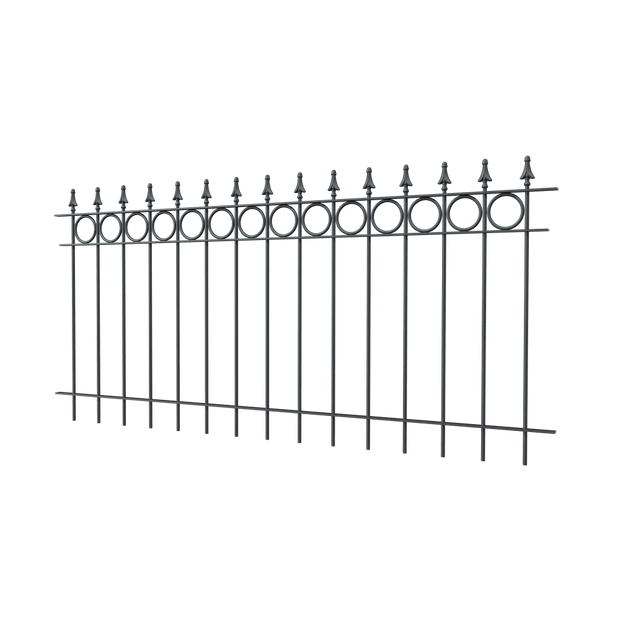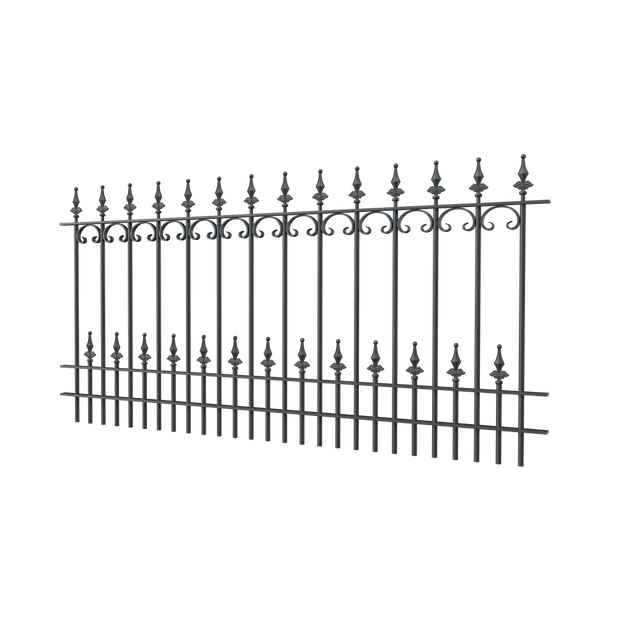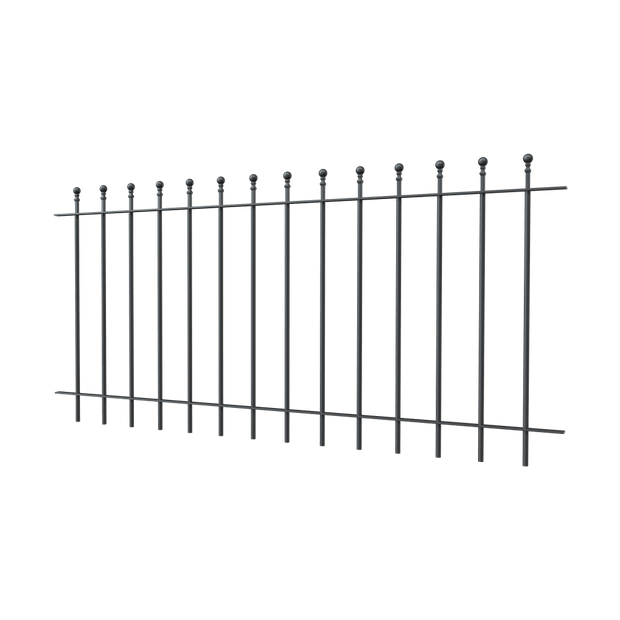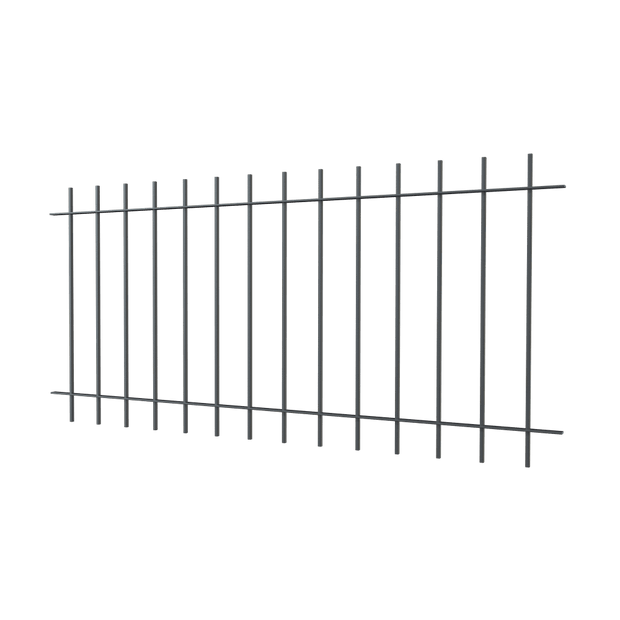

The most important points in brief
- A lawn edging under the garden fence makes mowing easier, protects plants from clippings, and ensures a neat appearance in the outdoor area.
- For creating the mowing edge, a combination of concrete and edging stones is usually recommended, with the height and material being flexible; the fence post positions serve as a guide.
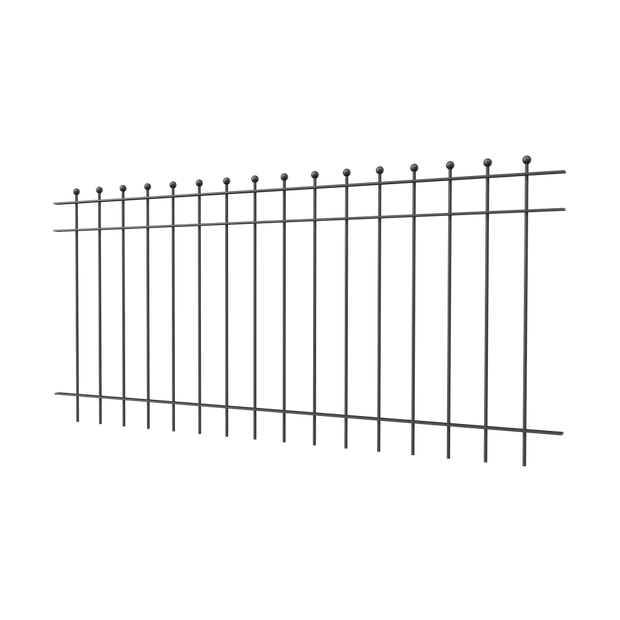
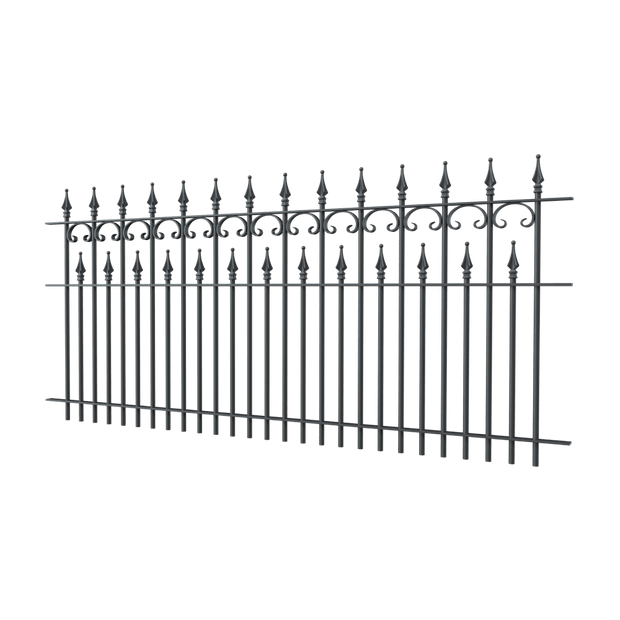
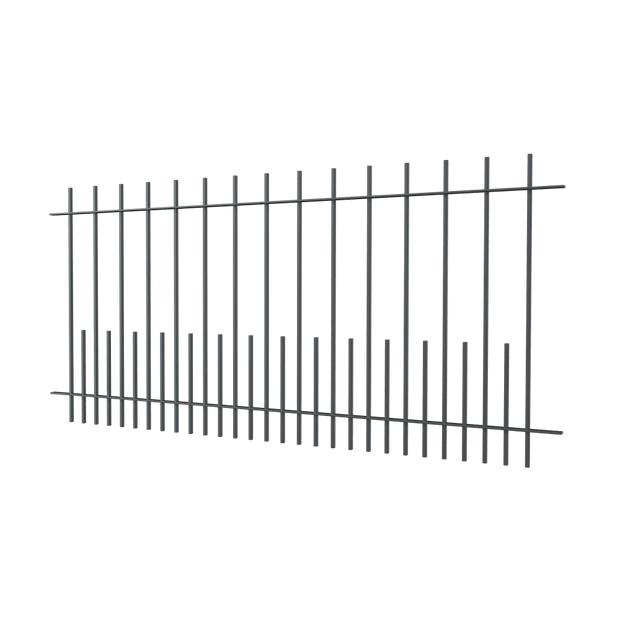
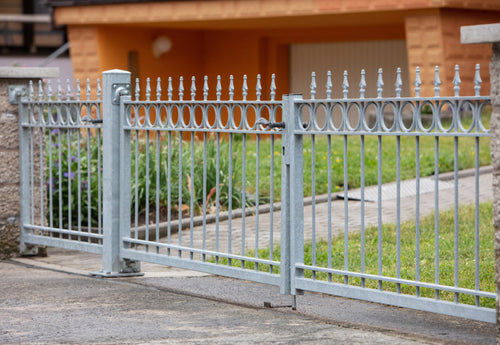
- ELEO offers suitable metal fences, such as the Belluno model, which can be individually adapted to your garden design thanks to various coatings.
Lawn edging under the fence – installed in 5 steps
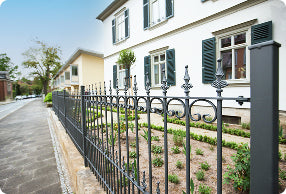
Lawn edging under the garden fence primarily serves to make mowing the lawn easier. Therefore, it is often referred to as a mowing edge. Furthermore, lawn edging clearly defines flowerbeds, paths, and the driveway, ensuring a tidy overall appearance. Creating a lawn edging under the fence is relatively easy – we'll show you how to install a mowing edge in 5 steps and explain what else you need to consider.
Is a lawn edging directly under the fence a good idea?
A lawn edging under the fence is a good idea to avoid the risk of cutting flowers and plants while mowing the lawn. It also allows for a clean and easy cut right up to the edge, without having to trim individual blades of grass.
How high should a lawn edging actually be?
There is no fixed height for lawn edging. The height depends on the type of lawn and the type of edging – lawn edging stones, plastic, aluminum, or wooden edging. Regardless of the height, the lawn edging should always be anchored deep enough in the ground to prevent it from tipping over or slipping.
Should I install the fence first or the lawn edging?
It's easier if you install the lawn edging first and then put up your fence. The lawn edging stones provide a good guideline for how deep the fence posts need to be inserted into the ground. If your garden fence is already in place and you'd like to add lawn edging later, that's no problem either.