
The key points at a glance
- A mediterranean garden impresses with warm earthy tones, natural materials such as stone and wood, and planting that appeals to all the senses.
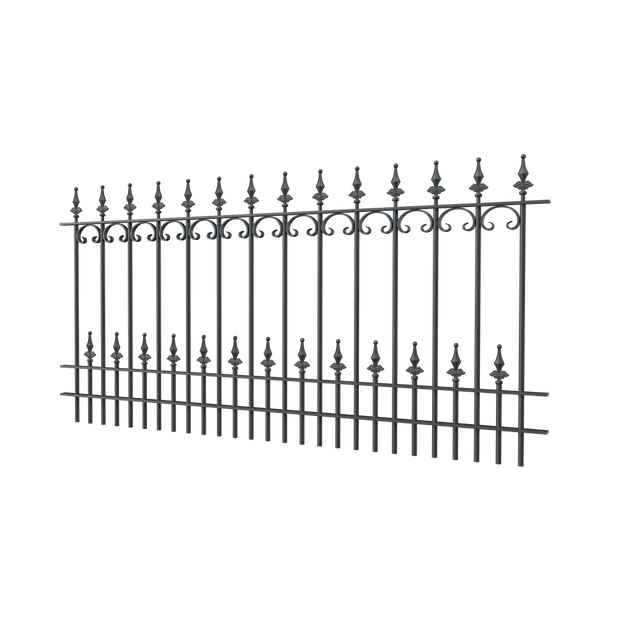
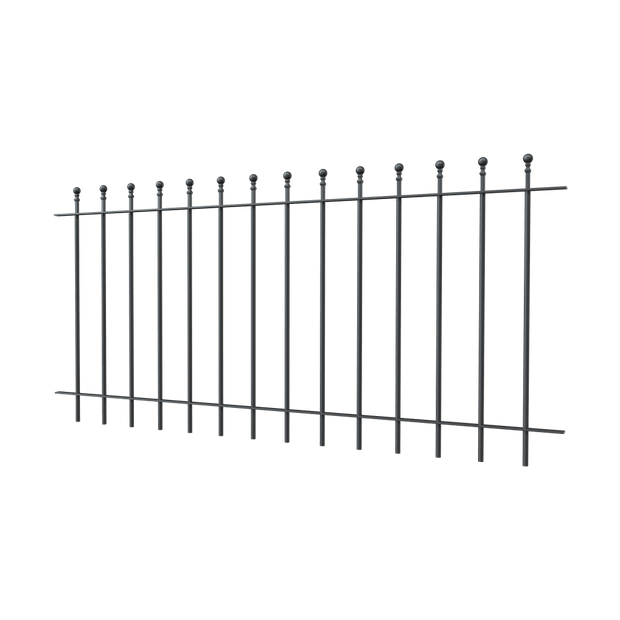
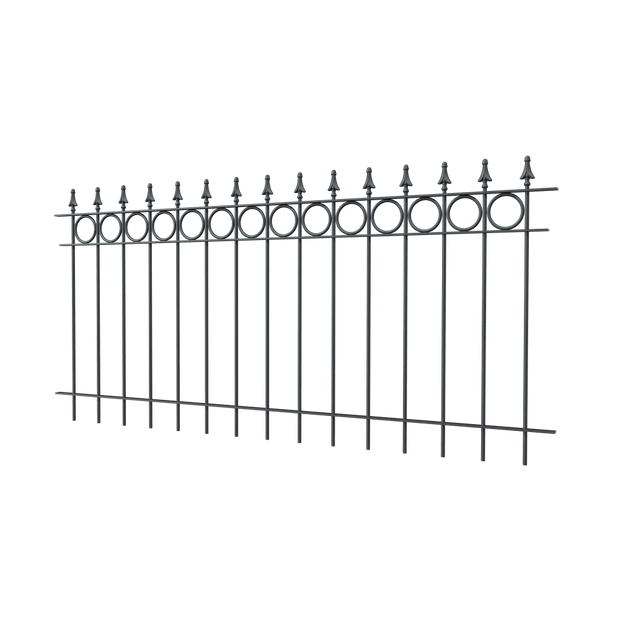
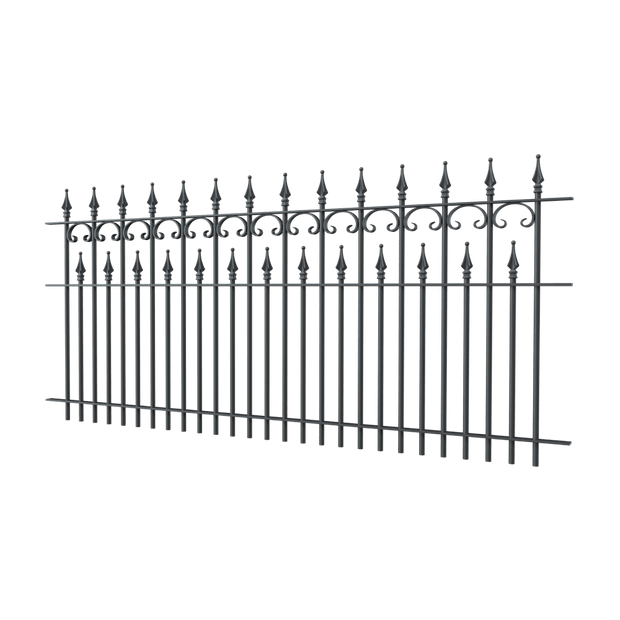
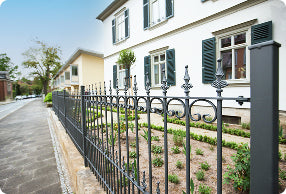
- A mediterranean fence made of metal with delicate, playful shapes frames the garden in style and creates a harmonious connection between all the elements.
- Durable metal fences and matching gates from ELEO Express form the low-maintenance basis for an outdoor area with a lasting holiday atmosphere.
What defines a mediterranean garden?
Mediterranean garden design is inspired by the landscapes of southern France, Italy or Spain. It is characterised by “ordered informality”: clear structures such as natural stone paths, small walls or a precisely positioned fence system meet loose, nature-inspired planting. Fragrant herbs, silvery-green foliage and colourful flowers create an atmosphere that is both lively and calming. Important elements include sunny seating areas, often shaded by a pergola, as well as the use of different levels, for example with raised beds or terraces.
The boundary of the property plays a central role. A fence designed in a Mediterranean style not only marks the boundary, but becomes an integral part of the design. Delicate metal elements with decorative arches or ornamental finials catch the light and serve as a picturesque backdrop for perennials and climbing plants. A matching garden gate becomes an inviting entrance that announces the garden’s special atmosphere as soon as you step inside and sparks curiosity.
Mediterranean garden design: colours, materials and plants

Warm colours and natural materials
The colour palette of the South is shaped by nature: terracotta, ochre, sand and cream tones, as well as muted earthy colours, form the basis. These shades appear in planters, natural stone flooring such as travertine or sandstone, and roughly rendered walls. Materials such as wood, gravel and metal complete the scene perfectly. Gravel paths crunch underfoot, wooden elements of a pergola provide shade, and metal adds elegant accents as a contrasting feature. It is precisely the combination of the rough feel of stone and the smooth, cool surface of metal that creates an exciting, high-quality look.
A metal fence and garden gate in dark shades such as black or anthracite (DB 703) stand out beautifully against light house façades and colourful blossoms. They give the garden structure without visually overwhelming it. Unlike a solid wall, a metal fence preserves an open, airy appearance and allows the planting to come into its own more strongly.
Lavender, olive tree and other mediterranean plants
Planting is the heart of every mediterranean garden. Lavender is the undisputed classic – its scent and violet flowers are the epitome of the South. It is ideal for edging paths or for larger areas of planting in front of the fence. Aromatic herbs such as rosemary, thyme and sage not only appeal to the senses, but are also highly versatile in the kitchen. An olive tree, ideally in a large terracotta pot, becomes a striking focal point. Slender columnar cypresses also add vertical accents and evoke Tuscany. Fig trees, oleander and citrus plants emphasise the southern ambience, but in our latitudes they require winter protection.
Hardy plants for the German climate
To create a low-maintenance and long-lasting garden, choosing hardy plants is crucial. Fortunately, there are numerous robust species that perfectly imitate the Mediterranean look and cope with our climate. These include Russian sage (Perovskia) with its silvery leaves and blue flower spikes, woodland sage (Salvia nemorosa), hardy lavender and various types of stonecrop (Sedum). Ornamental grasses such as fountain grass (Pennisetum) also bring lightness and movement to beds. What matters for all these sun lovers is well-drained soil. A layer of gravel or crushed stone as mulch not only suppresses weeds, but also stores the day’s warmth and protects against waterlogged soil in winter.
Mediterranean fence and garden gate – curved metal elements

Playful shapes and curved lines
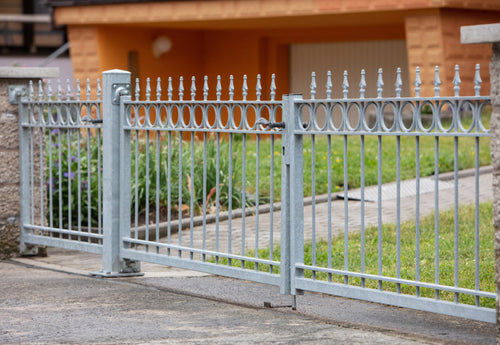
A Mediterranean-style garden fence can be playful and decorative. Curved top edges, gentle arches, delicate scrollwork and elegant ornamental finials soften the rigid boundary of the property. These organic forms create a harmonious connection between architecture and nature. Metal is the ideal material for such designs, as it can be shaped into the finest details while still offering tremendous stability and durability. A fence like this does not feel like a barrier, but like an open invitation and a stage against which the splendour of the plants can unfold.
Designing a garden gate in Mediterranean style
The garden gate is the calling card of the property. It should pick up on the design and colour of the fence, but may stand out through special details. A beautifully curved, double-leaf gate has a particularly prestigious effect. Framed by fragrant lavender or climbing roses, it becomes a picturesque focal point. Alongside aesthetics, convenience also matters: anyone wishing to automate access to the driveway will find the “Twist Black Edition” electric drive a suitable and reliable component for the gate system. ELEO Express supplies the sturdy, attractively designed metal products, while the drive makes everyday life easier.
The posts are crucial when choosing the right motor: the Twist M is designed for gate systems with posts up to 200 mm thick, which includes most ELEO posts. The Twist ML is used for more substantial concrete posts or posts over 200 mm wide. Both drive variants are powerful and suitable for gate leaves up to approx. 2.5 m wide and 300 kg in weight. Even inclines of up to 10% are no problem. Unlike in some illustrations, every set always includes two remote controls.
Colours and coating for the Mediterranean look
A dark coating in anthracite, black or an elegant dark brown gives the fence Mediterranean elegance. These colours form a calm backdrop against which the silvery leaves of lavender and olive trees, as well as the vibrant flower colours, appear particularly intense. A matt surface often supports the natural character of the garden better than a glossy one. However, the high-quality powder coating is not only for aesthetic reasons: it reliably protects the metal against the effects of the weather and ensures a permanently attractive, easy-care surface.
Why metal is particularly well suited to the Mediterranean style

Stability and weather resistance
A metal fence combines visual lightness with maximum robustness. It withstands wind, rain and UV radiation without warping or becoming brittle. In direct comparison with a wooden fence, which needs to be painted or stained regularly to prevent rot and weathering, a high-quality coated metal fence remains dimensionally stable and attractive for decades. This durability fits perfectly with the philosophy of a garden that is intended to grow and gain character over the years.
Easy to maintain thanks to hot-dip galvanising and powder coating
Modern metal fences from ELEO Express are optimally protected by a two-stage process. First, hot-dip galvanising provides seamless corrosion protection, with the steel being dipped into a bath of liquid zinc. The powder coating is then applied, which not only provides the colour but also forms a scratch-resistant and UV-resistant protective layer. This construction makes the fence extremely easy to maintain. In most cases, it is enough simply to wash off dirt with water and a soft cloth. That leaves more time to enjoy the garden.